
 ZUFEK
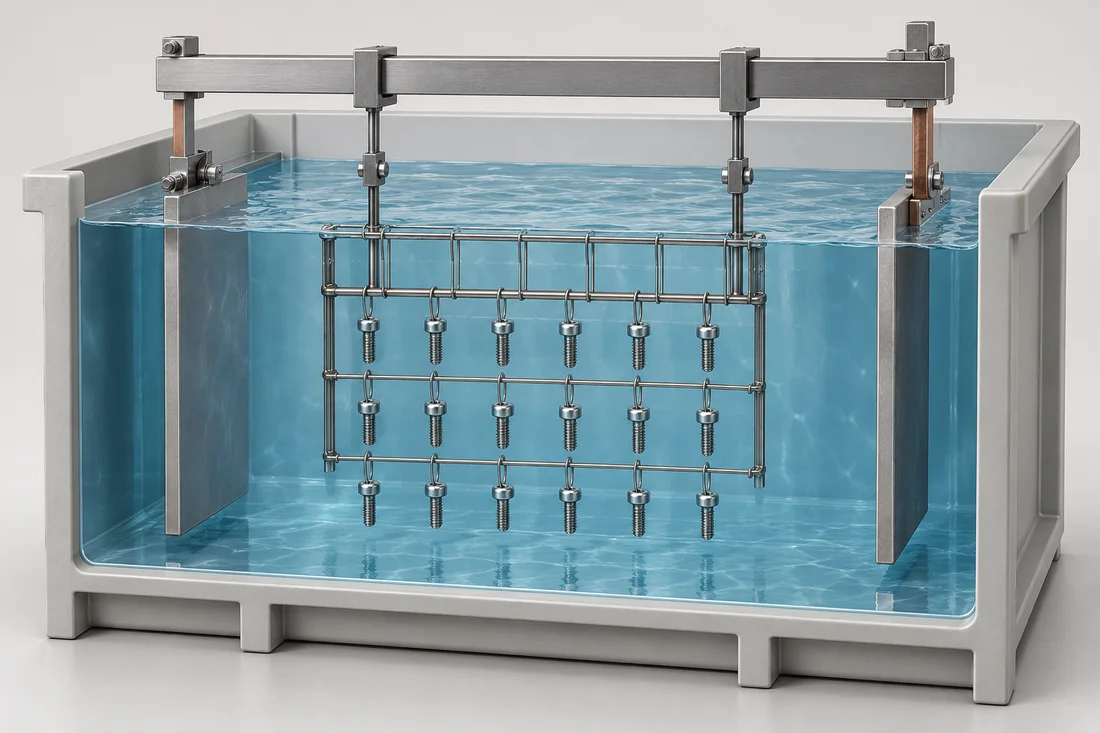
Define the purpose of the treatment
Record why the treatment is required. Possible purposes include corrosion protection, controlled assembly behaviour, reduced galling, appearance or another defined function. More than one may apply. Identify the installation environment and mating materials at a level that supports a meaningful review. “Outdoor use” is a starting point, not a complete exposure or validation requirement. Ask which performance requirements are component-level and which must be evaluated on the equipment assembly.
Do not select solely by colour. Two systems that look similar can have different preparation, coating, topcoat or lubrication arrangements. Conversely, a minor visual difference does not automatically indicate a functional failure unless appearance is part of the agreed specification. State the accepted scope and the method for evaluating it. This prevents a receiving team from making an undocumented engineering decision based on appearance alone.
Identify the material and finished property condition
Provide the exact material designation and condition, together with any required finished properties. The treatment provider needs enough information to review the appropriate route and controls. For high-strength steel, discuss process-related hydrogen concerns through the applicable specification and qualified process review. Do not treat a generic baking note as proof that every relevant risk has been removed. Do not assume that every coating has identical implications.
ISO’s published scope for ISO 4042 concerns electroplated coating systems for fasteners and includes hydrogen-risk considerations. Its listing also identifies an amendment. ISO 10683 covers non-electrolytically applied zinc-flake systems. These references help identify the correct specification family; they do not make the two systems interchangeable. Obtain and apply the current relevant requirements, including amendments and customer-specific conditions, rather than treating an abstract as the complete standard.
Map the surfaces and dimensional effects
Mark which surfaces receive treatment and which are excluded. Pay particular attention to threads, locating shoulders, bearing faces, internal passages and any surface with a specific assembly role. Define the final dimensions and acceptance condition after the relevant treatment. If an allowance is needed before treatment, agree its basis with the supplier rather than leave two different parties to make incompatible assumptions.
For a close-fitting shoulder, review the mating bore and the accepted final fit. For a thread, identify the applicable final acceptance method. For internal holes, clarify the intended treatment coverage and how it will be assessed where necessary. A generic coating instruction does not demonstrate that an inaccessible internal surface has received the required condition. State what evidence is needed for the actual interface and what remains an assembly-level evaluation.
Separate corrosion evidence from field-life claims
If a corrosion test is required, specify the test basis, sample condition, exposure requirement, evaluation criteria and reporting scope. Do not convert a test duration into a guaranteed number of service years. A loose fastener and an installed joint can experience different contact, damage and exposure conditions. The purpose of the test should be clear enough for the purchaser to understand what a result does and does not demonstrate.
Agree how handling and packaging will preserve the accepted condition. Treatment can be damaged after processing or confused through mixed lots. Identify any appearance limits and how disputes will be reviewed. Avoid broad claims such as “rust-proof in all environments” or “maintenance-free” without a valid basis for the complete application. A precise, limited claim supported by an appropriate record is more useful than a sweeping assurance that cannot be evaluated.
Review friction and assembly requirements separately
If installation behaviour matters, identify the required basis for friction or the approved assembly procedure. A coating change can require review even when corrosion requirements remain similar. Do not supply a universal tightening torque from a generic table without checking the actual fastener, mating thread, lubrication and joint requirements. The equipment design authority should approve installation conditions using an appropriate basis.
If a locking patch or other pre-applied material is included, specify its location, extent, relevant performance requirement and delivery condition. Keep that specification separate from the base coating. Discuss whether the sequence or combination affects other characteristics and how the completed part will be checked. An RFQ that simply says “plated plus locking glue” leaves too much open for comparable quotations or dependable repeat orders.
Create the quotation and acceptance record
Use fields for part and revision, material condition, treatment specification and edition, coating scope, final dimensional acceptance, appearance requirements, corrosion or other tests, installation-related requirements, records, packaging and change notification. Ask the supplier to identify exceptions before quotation approval. Confirm whether testing, external processing or special packaging affects the proposed schedule.
For sample release, record whether approval covers the complete final system or only an intermediate stage. Keep the accepted treatment record connected to the sample and production lot. If the treatment source, system or relevant process changes, follow the agreed notification and reapproval procedure. A familiar treatment name on a repeat order is not a substitute for controlling changes that affect the delivered interface.
Release checklist
Before release, confirm that the treatment purpose is defined, the material and property basis is known, sensitive surfaces are identified, final dimensions are accepted after relevant processing, tests have explicit criteria and documents can be connected to the delivered lot. Resolve every exception with the responsible approver.
The objective is not the longest possible coating note. It is a specification that connects the intended function with a feasible route and a clear acceptance decision. That connection allows the supplier to quote responsibly and lets the purchaser distinguish an acceptable treated fastener from one that merely has the expected colour.
Sources and scope
Source context is distinguished from ZUFEK editorial analysis. Examples are illustrative, not delivered customer cases or measured test results. Check the applicable current specifications for your product.