
 ZUFEK
Special Threads & Shanks
Fine pitches, special profiles, modified tips and stepped or tapered shanks defined by the drawing.
Drawing and sample checks
| Products | Application | What to specify | What to check |
|---|---|---|---|
| Fine & Extra-Fine Pitch Screws | Drawing-defined fine pitches support adjustment and engagement requirements where a standard selection does not fit. | Fine pitch alone does not guarantee resistance to loosening. Specify locking and vibration requirements separately. | Gauge after finishing and verify seating before bottoming. |
| Special & Compound Thread Profiles | Trapezoidal, buttress, high-low and compound thread arrangements require an explicit profile and matching part. | Self-locking depends on geometry, friction and operating conditions. Do not assume every trapezoidal or buttress thread is self-locking. | Agree a profile check and a separate functional trial. |
| Modified-Tip Self-Tapping Screws | Slotted, cut or relieved ends can be specified around the actual material and hole condition. | Cutting tips can generate chips. Debris and breakthrough control must be demonstrated in the actual assembly. | Trial installation in representative material and check the agreed torque limits. |
| Reduced & Variable Shank Screws | A reduced or stepped shank introduces a deliberate change in section between functional features. | A reduced shank does not automatically prevent cracking. Supply load and fatigue requirements for design review. | Verify final geometry and agree mechanical verification for the reduced section. |
| Tapered Shank & Cone Screws | A defined taper or conical surface establishes a locating, contact or sealing interface with a matching component. | Sealing performance requires a matched design and verification; a taper alone does not establish leak tightness. | Check contact and seated depth in the matching seat. |
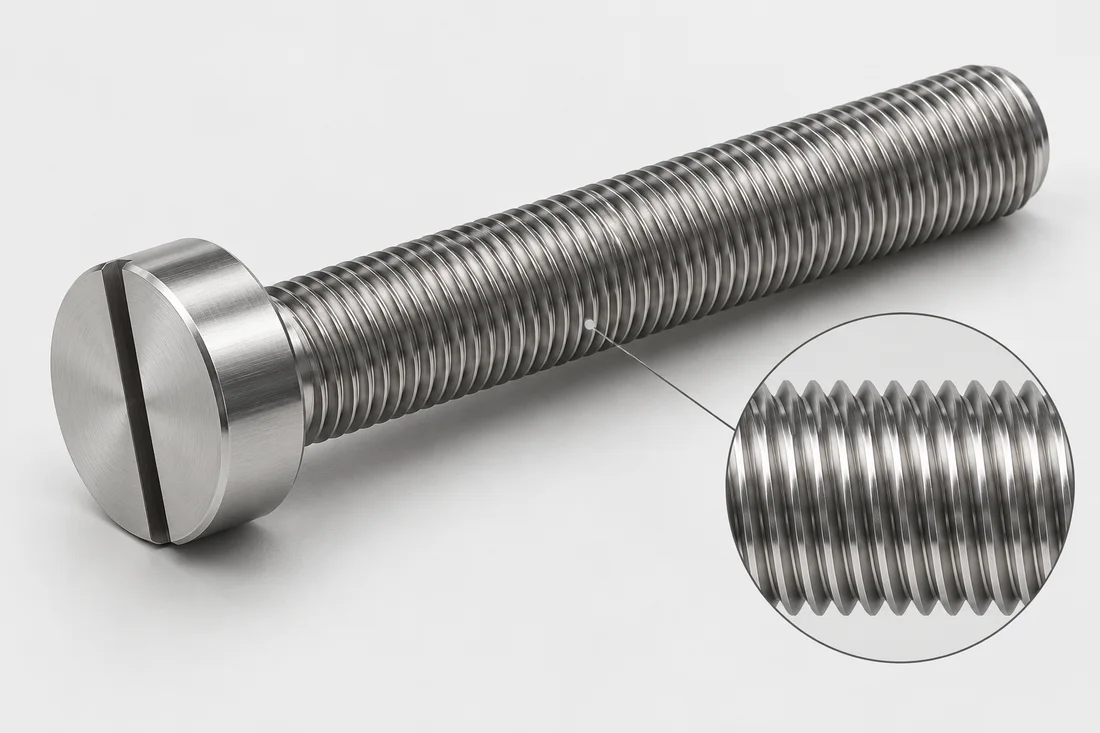
Fine & Extra-Fine Pitch Screws ↗
Drawing-defined fine pitches support adjustment and engagement requirements where a standard selection does not fit.
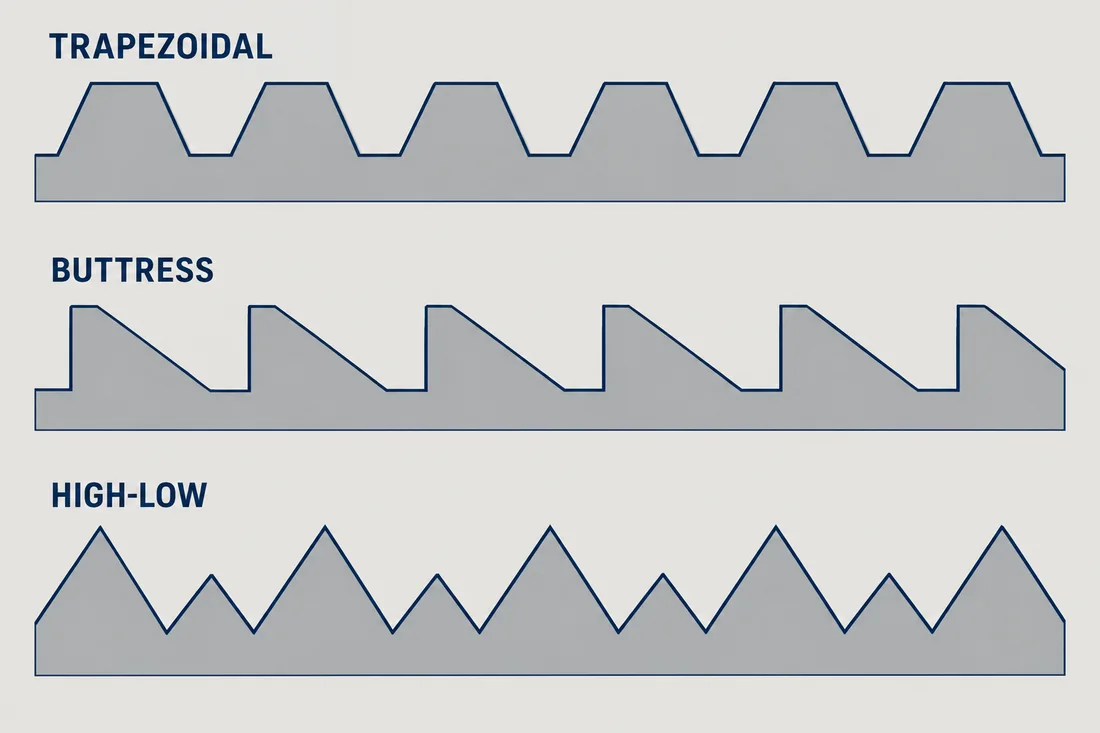
Special & Compound Thread Profiles ↗
Trapezoidal, buttress, high-low and compound thread arrangements require an explicit profile and matching part.
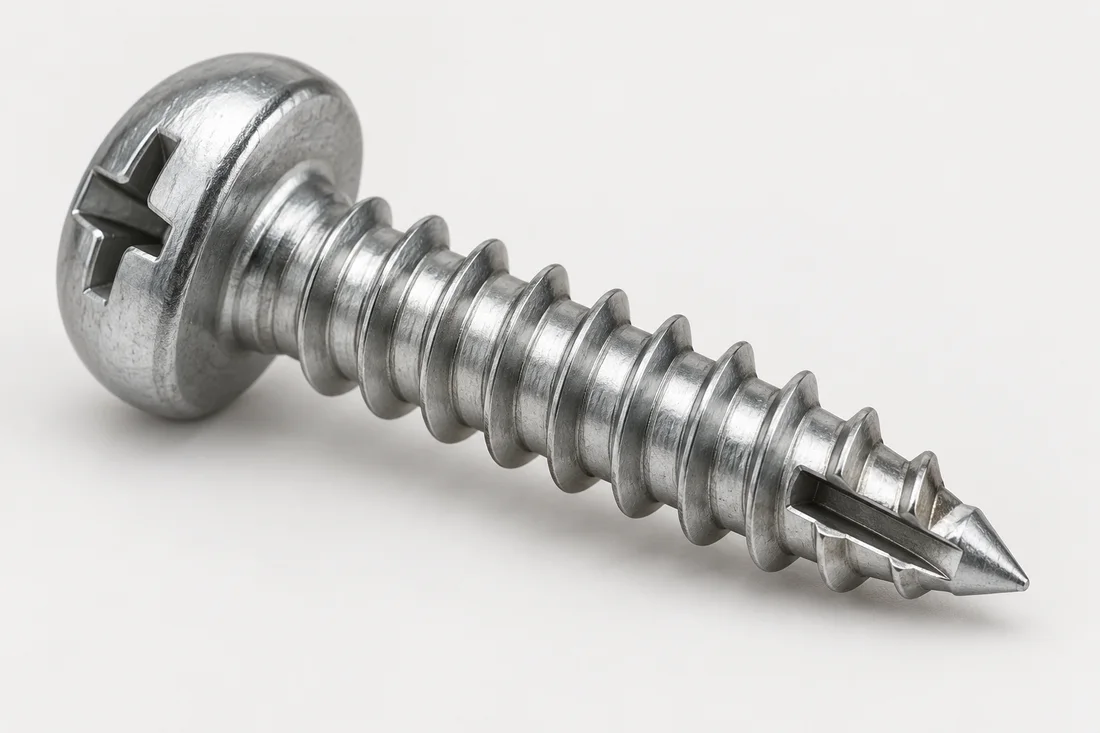
Modified-Tip Self-Tapping Screws ↗
Slotted, cut or relieved ends can be specified around the actual material and hole condition.
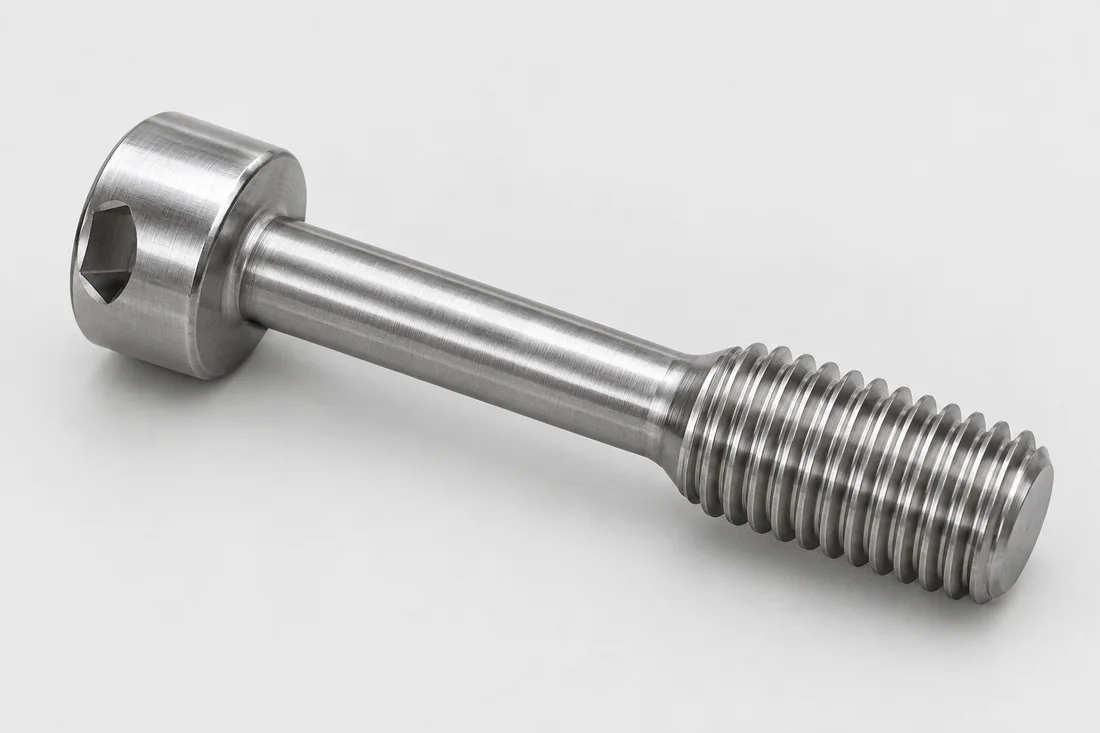
Reduced & Variable Shank Screws ↗
A reduced or stepped shank introduces a deliberate change in section between functional features.
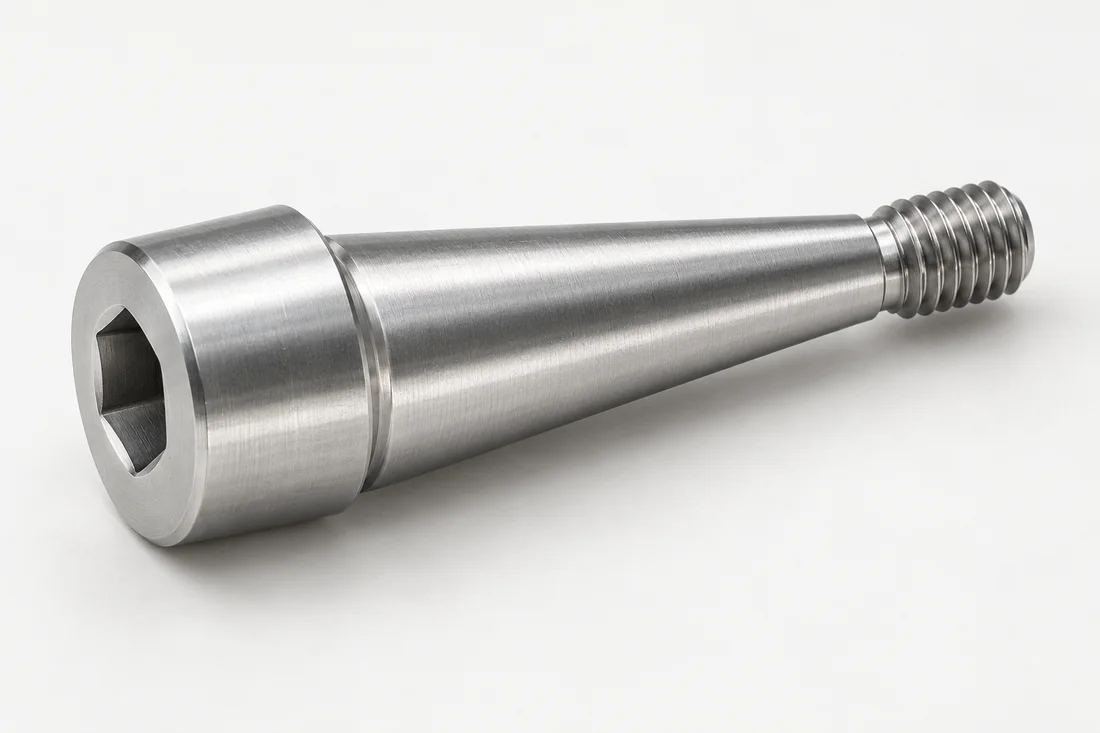
Tapered Shank & Cone Screws ↗
A defined taper or conical surface establishes a locating, contact or sealing interface with a matching component.
Plan the manufacturing route.
Volume, material and functional features determine how the design is produced.
Drawing and sample checks
- Specify profile, pitch and mating thread
- Verify the finished thread and usable engagement separately.
Have a drawing? Let’s review it.
Share your drawing, quantity and application requirements with our team.