 ZUFEK
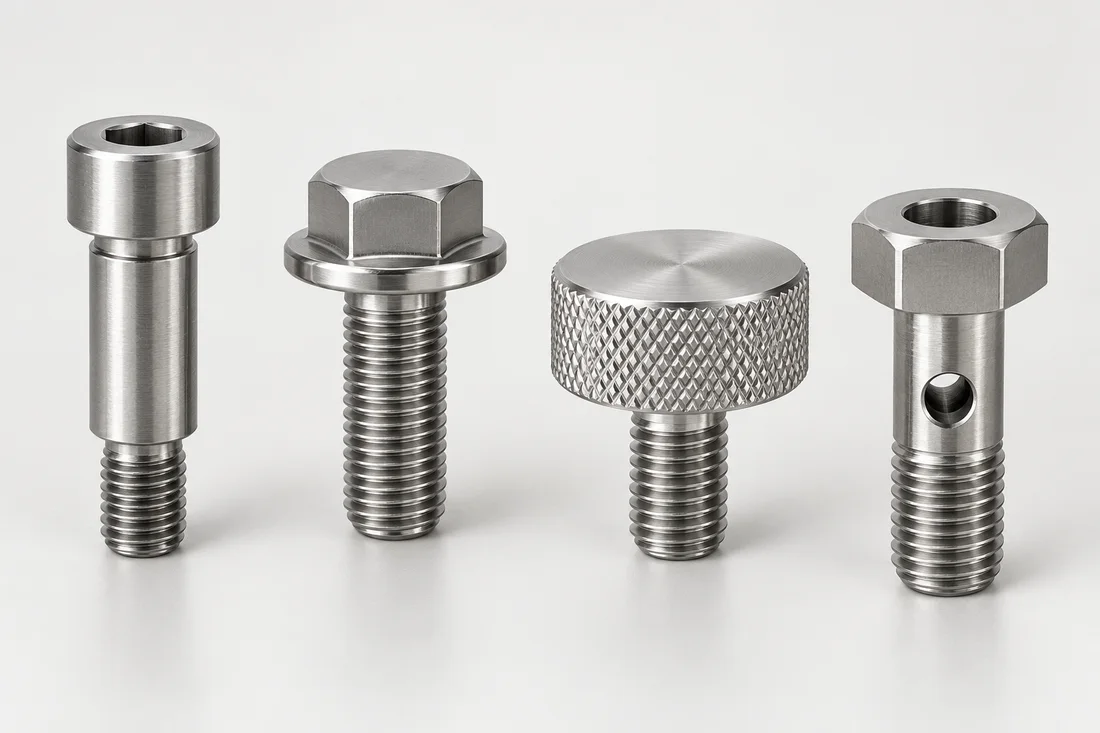
Start with the decision, not the material list
An aluminum screw is a real, manufacturable part. Alloys such as 6061-T6 or 6082-T6 are machined into adjustment screws, thumb screws, multi-step and hollow geometries, and the same stock data behind those grades is publicly available. What that data does not tell you is how a particular screw, in a particular joint, will behave.
So frame the decision as a comparison against the real alternatives for the same function:
- **Coated steel** (for example a zinc or zinc-flake finish on a specified steel grade) — the usual baseline where strength and cost matter.
- **A specified stainless grade** (for example a named 304 or 316 condition) — for corrosion exposure, subject to its own galling and strength questions.
- **An aluminum alloy and temper** — where low mass or machined complexity drives the design.
The comparison is only meaningful when all three are judged against the same requirement set: function, environment, mating material, thread engagement, finish and required evidence. A stock tensile figure for aluminum next to a finished property class for steel is not like-for-like. Use the [material and strength selection workflow](/guides/material-strength-selection/) to keep the requirements fixed while the materials change.
Why a stock strength figure does not settle a screw's capacity
The aluminum grade reference on this site lists, for example, 6061-T6 extruded stock at roughly 260 MPa minimum tensile and 240 MPa minimum yield, and 6082-T6 at roughly 310 MPa tensile and 260 MPa yield, for the stated section range. Read those numbers carefully: they are stock-material references attached to a named temper and product form. They are not a rating for a finished screw, and they say nothing about the assembled joint.
Two distinctions matter here.
**Temper and form travel with the value.** The same alloy in a different temper has different properties. A number quoted for T6 stock cannot be assigned to unspecified or annealed stock, or to a part whose processing changed its condition.
**The joint can govern before the screw does.** Thread engagement, the mating material and the bearing area under the head decide how a connection actually behaves. An aluminum screw may be adequate in a lightly loaded locating or adjustment function and inadequate as a high-preload clamp, not because the alloy number changed but because the joint demand did.
For a comparison against steel or stainless, ask what finished mechanical acceptance the drawing requires — and how it will be evidenced — rather than transferring a stock value across materials. That requirement is confirmed for the actual drawing and order, not assumed from a catalogue line.
Thread engagement and wear: the aluminum-specific penalty
Aluminum is softer than steel, and this is where most aluminum-screw problems originate. Threads in or against aluminum strip, gall and wear more readily under repeated assembly or high preload. The practical consequences:
- **More engagement is usually needed** than a steel-on-steel joint of the same diameter would suggest. A larger diameter, a longer engaged length or a harder mating member are the usual levers.
- **Aluminum screw into an aluminum tapped hole is the worst stripping case.** Both members yield at similar low loads, so the thread can fail with little warning.
- **A steel or stainless screw into an aluminum part can be acceptable** if the thread is designed for it — engagement length, diameter and assembly torque all reviewed for the actual joint. The harder screw does not remove the risk; it relocates it to the aluminum thread, which is then the limiting feature.
None of these are universal rules with fixed numbers. The required engagement, allowable torque and acceptance for stripping or wear depend on the specific geometry and must be confirmed for the actual drawing. When the function is repeated assembly or a maintained preload, treat thread durability as a design requirement, not an afterthought.
For the manufacturing side, thread generation in aluminum is reviewed together with the geometry — see [thread rolling, cutting and tapping](/capabilities/threading/).
Galvanic corrosion: which member corrodes, and why it matters
When aluminum contacts steel — and especially stainless steel — in the presence of an electrolyte such as moisture or a conductive cleaning residue, a galvanic couple forms. Aluminum is anodic relative to these metals, so the aluminum member is the one that corrodes at the contact. This is the direction readers most often get backwards: pairing an aluminum part with a stainless screw does not make the aluminum "protected"; it makes the aluminum the sacrificial side of the couple, particularly where moisture is trapped.
Defensive measures are qualitative and application-specific:
- Isolate the contact with a suitable coating, sealant or barrier where the design allows it.
- Choose compatible plating or finishes on the steel or stainless member and confirm their effect on the couple.
- Design drainage and avoid trapped moisture at the interface.
- Avoid assuming that a bright or anodized appearance identifies the finish or guarantees corrosion performance.
The specific coating, isolation method and acceptance must be confirmed for the actual drawing and environment. An anodized aluminum screw is not automatically the right answer, and a coated steel screw is not automatically wrong — the couple and the environment decide. Where surface treatment is part of the plan, review it with [coatings and surface treatments](/capabilities/surface-treatment/) and the [surface treatment specification guide](/guides/surface-treatment-specification/).
Where aluminum screws make sense — and where they do not
Aluminum earns its place when the design is already working around its limits. Reasonable candidates:
- **Mass-critical assemblies** where the screw's weight matters to the system.
- **Machined one-piece geometry** that combines steps, bores, adjustment features or a hollow passage — shapes that are easier to produce in aluminum by turning than in steel.
- **Low-torque adjustment and locating hardware**, where the screw positions or retains rather than carries high preload.
- **Electronics and optical equipment**, fixture components and equipment covers, matching the application range stated for the aluminum alloy page — provided the thread, wear and contact requirements are reviewed.
Cases where coated steel or a specified stainless grade is the better baseline:
- **High preload or load-bearing clamping**, where aluminum's lower strength and stripping resistance work against you.
- **Repeated assembly and disassembly**, where aluminum threads wear or gall.
- **Aggressive corrosive environments**, where the aluminum member would be the anodic side of a couple.
- **High-temperature service**, where the aluminum condition and the joint behavior need separate review.
This is a decision about the joint, not a ranking of metals. A lightly loaded indoor adjustment screw in aluminum can be the right call; the same material in an outdoor bracket with moisture and dissimilar-metal contact is usually the wrong one.
A worked comparison with explicit assumptions
The following is an illustrative planning record, not test evidence and not a delivered case. All materials and numbers are assumed for the example.
**Scenario A — indoor adjustment screw.** Assumed function: a low-load optical adjuster inside a sealed enclosure; indoor, dry; aluminum tapped hole; occasional adjustment only. Requirements: low mass, a machined stepped shape, no structural load.
- Aluminum 6061-T6 machined screw: matches the mass priority and the stepped geometry; engagement and assembly torque specified against the aluminum hole; no moisture, so the galvanic couple is not active. Plausible fit.
- Stainless screw: acceptable functionally but heavier and not needed for corrosion in a dry enclosure; adds no benefit here.
- Coated steel screw: also workable but does not give the mass or machining advantage that motivated the design.
**Scenario B — outdoor bracket screw.** Assumed function: clamps an aluminum bracket exposed to rain and cleaning; repeated service. Requirements: maintained preload, corrosion resistance, repeated assembly.
- Aluminum screw into aluminum bracket: worst stripping case, plus the aluminum is anodic in any couple — poor fit.
- Stainless screw into aluminum bracket: corrosion resistance is good on the screw, but the aluminum bracket becomes the anodic side; isolation, drainage and thread engagement in the aluminum must be designed in. Plausible with those controls.
- Coated steel screw: workable if the coating suits the environment and the couple is managed; usually the cost baseline.
Same requirement set, different answers — which is the point. Confirm every value and material against the actual drawing before relying on the comparison.
What to put in the RFQ, and what to confirm next
Once aluminum is a candidate, the drawing and RFQ should close the same gaps that decide the comparison:
- **Exact alloy and temper**, plus product form and the applicable material specification. Do not write "aluminum" alone.
- **Finished mechanical acceptance** required for the part and how it will be evidenced — separate from the stock reference.
- **Mating material and thread engagement**, with the assembly torque or preload range.
- **Coating or anodizing**, including its dimensional allowance and its effect on the galvanic couple.
- **Documentation** required — material records, inspection scope and acceptance criteria. See the [inspection acceptance plan](/guides/inspection-acceptance-plan/) and the [RFQ checklist](/guides/rfq-checklist/).
- **Substitution approval** — who signs off an alternate grade or temper, recorded against the drawing revision.
Tooling and sampling are typically about 10–15 days, subject to drawing review and quotation confirmation; repeat-production delivery is quoted separately. Final material suitability, dimensions, tolerances, coating, mechanical acceptance and quantities are confirmed for the actual approved drawing and order.
The next step is concrete: send the drawing with the load or locating function, the service environment, the mating materials and the quantity. For aluminum specifically, ask for a proposed alloy and temper with stated assumptions and the thread-engagement and corrosion review, then approve the material and sample together. Start a [drawing review](/request-a-quote/), and read the [aluminum alloys grade reference](/materials/aluminum-alloys/) and the [custom metal screws overview](/products/custom-screws/) alongside it.
Specification checklist
- State the exact aluminum alloy and temper, not just "aluminum".
- Separate stock material figures from the finished screw's required mechanical acceptance.
- Confirm mating material, thread engagement and assembly torque for the real joint.
- Identify which member is anodic in any aluminum-steel couple and plan isolation or drainage.
- Specify coating or anodizing and its dimensional allowance.
- Agree documentation, inspection scope and substitution approval against the drawing revision.
Application example
Illustrative planning record (assumed, not test evidence): Scenario A — indoor low-load optical adjuster, aluminum tapped hole, occasional adjustment; 6061-T6 machined screw is a plausible fit on mass and stepped geometry, with engagement and torque specified against the aluminum hole. Scenario B — outdoor aluminum bracket with moisture and repeated service; aluminum screw is a poor fit (worst stripping case, anodic member), a stainless screw needs isolation, drainage and engagement designed in, and coated steel is a workable baseline if the coating suits the environment.
Related manufacturing topics
Related engineering resources
- Aluminum Alloys — Custom Screw Strength & Uses | ZUFEK
- Choosing material for a custom metal screw | ZUFEK
- Custom Screw Material & Strength Selection Workflow | ZUFEK
Continue exploring
Related custom fasteners · Manufacturing capabilities · Technical blog