
DONGGUAN ZUFEK PRECISION CO., LTD.
info@zufek.net
QUALITY / 2 MIN READ

Technical cleanliness: writing a useful fastener requirement

Cleanliness becomes a technical requirement when contamination can affect the assembly. Define what needs to be removed, how it is measured and how the clean condition is protected.

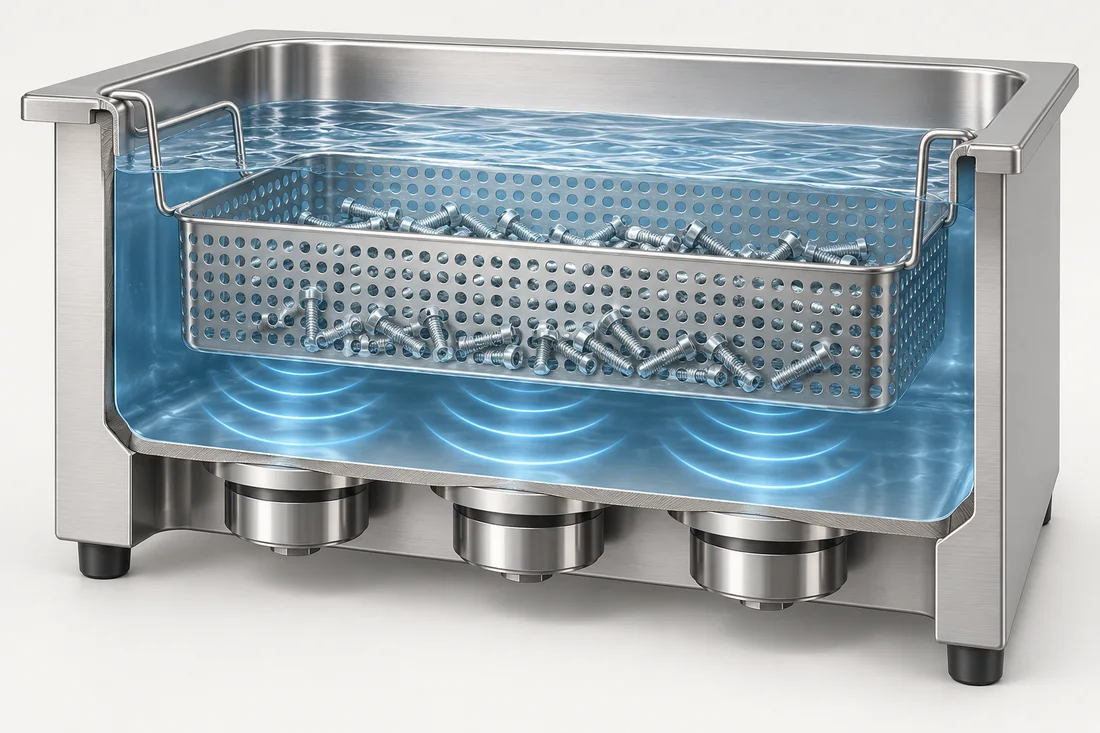
Ultrasonic cleaning illustration with an immersed basket and external transducers
Cleaning, Locking & Assembly

Describe the contamination concern

Explain whether particles could block a passage, damage a contact surface or affect another assembly function. Identify internal bores, thread roots and other areas that matter. A generic clean-and-dry instruction does not communicate a particle limit or a verified extraction method.

Agree the method and acceptance criteria

If a recognized cleanliness framework is required, specify the applicable procedure and project criteria. State the surfaces, extraction approach, reporting and acceptance limits relevant to the part. A standard number by itself does not define all of these choices for a particular order.

Working on this type of part? Explore our hollow & through-hole screws and include the functional requirements in your RFQ.

Separate deburring from cleaning

Attached burrs and loose residue are different conditions. The manufacturing route should address edge condition before the agreed cleaning process. Inspection may need to evaluate both, especially at cross holes and internal intersections where visual access is limited.

Protect the result through handling

Define drying, handling and packaging appropriate to the requirement. Recontamination can occur after cleaning if the process and packing sequence are not coordinated. Include the expected condition at delivery and any restrictions on protective oil or other residues.

Specification example

For an adhesive-dispensing passage, provide the smallest relevant flow section and the contamination acceptance requirement. A cleaning process can then be reviewed against the actual passage rather than a general appearance target.

RFQ checklist

  • Functional contamination concern
  • Specified surfaces and passages
  • Extraction and acceptance method
  • Permitted residues and dryness
  • Handling and packaging controls
Ready to discuss your part?

Use the RFQ preparation checklist, then submit your drawing for review. For acceptance requirements, see quality planning.

General guidance only. Material properties, tolerances, standards and manufacturing feasibility must be verified for the actual specification. This article does not establish a product performance guarantee.

Continue exploring

DESIGN & DIMENSIONS3 MIN READ

Hollow screw bores: the details an RFQ should include

Specify the complete bore, minimum remaining wall, internal edges and acceptance method. Use thread-root geometry and bore offset in the section review.

By Theo WanRead technical guide →
QUALITY2 MIN READ

First-article approval for custom screws: a practical handoff

A sample is most useful when its identity, revision and acceptance scope are clear. First-article planning connects the approved drawing with the evidence needed before the next production decision.

By Theo WanRead technical guide →
QUALITY2 MIN READ

Sampling and 100% inspection: choosing the right coverage

Inspection coverage should follow the characteristic and acceptance plan. Saying that a non-standard screw needs full inspection leaves the method, features and evidence undefined.

By Theo WanRead technical guide →

Related manufacturing topics

CONNECTED SPECIFICATION TOPICS

Connect the part to its requirements.

Review these related topics for this design or route. Grade, treatment, geometry and acceptance remain drawing-specific.

START YOUR NEXT PROJECT

Have a drawing? Let’s review it.

Share your drawing, quantity and application requirements with our team.

Request a quote
Get a quote ↗Email us

Choose how this website uses optional storage. You can change your choice at any time.

Your preferences are saved in this browser for 180 days. You can change or withdraw consent at any time. Withdrawal stops optional analytics and removes source information stored in your browser. Website access records are managed separately; contact us to exercise your privacy rights.

Read the cookie policy