
 ZUFEK
SUS304 & SUS316 Stainless Steel
Austenitic stainless choices for parts where corrosion exposure, surface condition and the specified fastener strength class need to be considered together.
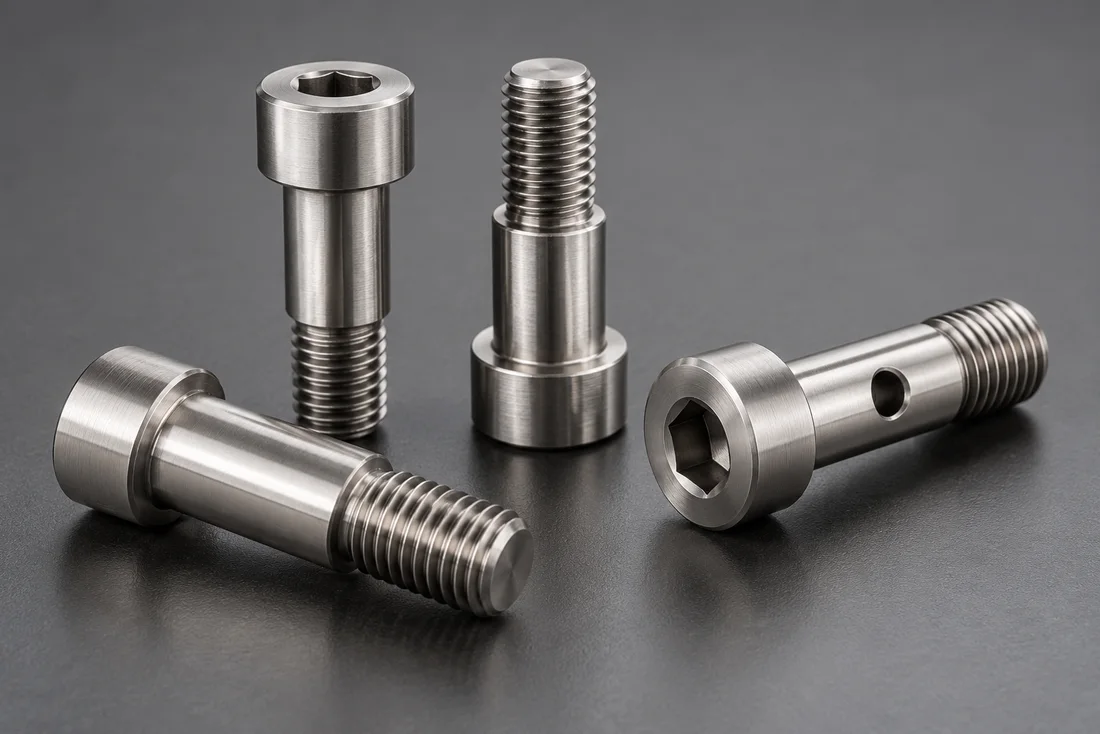
Strength reference
A2/A4 groups and classes such as 70 or 80 describe finished stainless fasteners under the applicable specification. SUS304 or SUS316 alone does not establish A2-70 or A4-80 performance.
| Grade / condition / basis | Tensile strength Rm (MPa) | Yield / 0.2% stress (MPa) | Scope of the reference |
|---|---|---|---|
| ISO 3506 class 70 reference | 700 minimum | 450 minimum | Applicable austenitic fasteners; confirm grade, size and product scope. |
| ISO 3506 class 80 reference | 800 minimum | 600 minimum | Applicable austenitic fasteners; verify the ordered class and scope. |
Values refer to the stated material or fastener-class basis. They are not a certified property or load rating for every ZUFEK custom geometry. Confirm the applicable specification and test condition for the ordered part.
Compare grades and delivery conditions
A material family is a starting point, not a complete specification. The following options are selection references; supply and suitability require drawing review.
| Grade or specified condition | What distinguishes it | When to consider it | What to confirm before ordering |
|---|---|---|---|
| 304 / SUS304 | General-purpose austenitic stainless; specify the governing standard. | General equipment and enclosure fasteners in suitable environments. | Not corrosion-proof; review exposure, galling and final fastener class. |
| 304L / SUS304L | Lower-carbon variant of the 304 family. | Consider when welding or fabrication-related corrosion requirements call for it. | The L suffix does not mean a higher strength class. |
| 316 / SUS316 | Molybdenum-bearing austenitic stainless. | Consider when the exposure assessment calls for improved resistance over 304. | Chloride concentration, temperature and crevices still require review. |
| 316L / SUS316L | Lower-carbon variant of the 316 family. | Consider where fabrication or welding requirements justify the lower-carbon grade. | Specify grade and final condition rather than assuming every 316 part is 316L. |
| 303 | Free-machining austenitic grade. | Turned parts where machining productivity is important and corrosion requirements permit it. | Do not substitute for 304 or 316 without assessing corrosion and fabrication requirements. |
| 17-4PH / UNS S17400 | Precipitation-hardening stainless, distinct from 304/316. | A separate comparison when the required strength and corrosion balance justify it. | Order the aging condition, such as H900 or H1150, with the product specification; properties differ by condition. |
How to narrow the choice
Start with the exposure and fabrication requirements, then assess manufacturing and assembly. A2/A4 fastener groups are not universal synonyms for a specific JIS or ASTM grade. Order the exact grade plus the applicable finished fastener class; passivation does not upgrade 304 into 316.
Write an unambiguous material requirement
Include the designation standard, exact grade, product form, delivery condition, final mechanical requirements, surface treatment and acceptance evidence. Similar names across EN, ASTM, SAE, JIS or GB systems are comparison leads, not permission to substitute.
If the grade is not yet decided, send the load or locating function, environment, mating materials, quantity and drawing. Ask for a proposed grade and route with stated assumptions before approving the material.
The listed grades are comparisons for drawing review, not a declaration that every grade, size or treatment is held in stock. Availability, route and ordered evidence are confirmed in the quotation.
Selection, processing and acceptance
Choose the grade and condition together with the job the screw performs. The following checks connect the material shortlist to manufacturing and sample acceptance.
- Function and grade choice
- For general equipment, compare 304 with the actual moisture and cleaning exposure. Consider 316 where its molybdenum-bearing composition suits the corrosion assessment, not simply because the part is outdoors. Use 303 when machining benefits justify its different corrosion and fabrication behavior. Review 17-4PH separately when a precipitation-hardening route is needed.
- Processing and final dimensions
- Austenitic 304/316 can gain strength through cold work; conventional quench-and-temper treatment does not turn them into high-strength martensitic screws. For 17-4PH, name the aging condition and plan dimensional acceptance after treatment. Passivation is a surface process, not a change from 304 to 316 or a method of assigning class 80.
- What the sample must demonstrate
- Identify the grade, ordered condition and any applicable finished-fastener class independently. For repeated assembly, review mating materials, lubrication or coating and the tightening method to manage galling. Agree corrosion or surface acceptance for the actual exposure; a material certificate and a salt-spray result answer different questions.
Example: a SUS316 cable feed-through for an outdoor enclosure
Specify the exposure and passage function alongside the grade. Outdoor use alone does not define chloride exposure, cleaning conditions or the mechanical demand on the connection.
Illustrative material request. Drawing-specific limits and acceptance criteria remain to be agreed; this is not a released design or a ZUFEK test result.
- Grade and supplied condition
- SUS316 bar with the governing material standard and supplied condition stated. Identify whether the drawing actually calls for SUS316 or SUS316L.
- Finished-part requirement
- Specify any applicable finished fastener class independently of the stock grade. Check the hollow section and mating connection against the actual load.
- Surface and mating interface
- Define the bore edges, contact with dissimilar metals, cleaning and any passivation. Check usable thread and final passage clearance after processing.
- Acceptance records
- Request the agreed grade/lot record and final checks. Record the specified surface treatment separately from material identity.
- Alternative to review, not assume
- 303 favors a different machining/corrosion balance; 304 or 316L needs an application review rather than a name-based substitution.
Material selection questions
Is 316L stronger than 316?
The L suffix identifies a lower-carbon variant, not a higher strength level. Compare properties for the same product and condition, and select the low-carbon grade for the fabrication and corrosion requirements that justify it.
Are A2-70 and SUS304 the same specification?
No. A2-70 combines a stainless fastener group with a property class; SUS304 identifies a material grade under its governing specification. State both material identity and finished-fastener requirements where both are needed.
Why consider this family?
- Useful for corrosion-exposed equipment and accessible exterior hardware
- Grade and finish can be chosen for the actual medium
- Commonly discussed for machined and custom-formed screw geometries
Application range
Equipment covers, electronic and optical housings, outdoor security hardware and selected fluid-handling connections.
Selection and process considerations
304 and 316 are not precipitation-hardening grades. Review the actual environment rather than assuming any stainless part is corrosion-proof. Consider thread galling, mating metals, cleaning and passivation. Form and final condition affect the mechanical requirements.
Include in the RFQ
- 304 or 316 grade requirement
- Finished fastener class where applicable
- Exposure medium and mating metals
- Surface condition, passivation and thread acceptance
Related products and manufacturing routes
Relevant application discussions
Choose material and finished strength together
Use a common set of functional, environmental and acceptance requirements before comparing grades and conditions. Separate material stock figures from finished fastener classes and assembled joint performance.
Follow the material and strength selection workflow ↗Turn the material shortlist into an order requirement
Choose the grade for the environment, then specify the finished-part requirement. A free-machining knob, a general enclosure screw and a chloride-exposed connection do not justify the same material substitution.
| Application | What to specify | What to check |
|---|---|---|
| Machined adjustment knob | Review 303 where machining productivity matters and the exposure permits it. | Approve corrosion and fabrication suitability before substituting it for 304. |
| General equipment cover | Review 304 with the actual cleaning medium, mating metal and assembly conditions. | Specify final strength where applicable and consider thread galling during assembly. |
| Chloride-exposed installation | Review 316 against concentration, temperature and crevice conditions. | Do not infer corrosion-free service, or select 316L solely because it sounds stronger. |
In the RFQ, enter the designation standard and grade, final condition or fastener class where applicable, finish, mating material and required documents as separate fields. A stock certificate identifies the supplied material; it does not by itself verify every final-part property or the assembled connection.
Download the material specification worksheet (English)Connect the part to its requirements.
Review these related topics for this design or route. Grade, treatment, geometry and acceptance remain drawing-specific.
304, 316 and 17-4PH: different heat-treatment questions ↗
Stainless steel describes several material families. Specify the grade and final condition rather than writing one generic heat-treatment instruction.
ENGINEERING GUIDENickel plating and stainless passivation: different RFQ requirements ↗
A bright appearance does not identify a surface process. Specify the substrate and required surface function before choosing between plating, passivation or another treatment.
Discuss sus304 & sus316 stainless steel for your drawing.
Share your drawing, quantity and application requirements with our team.