
 ZUFEK
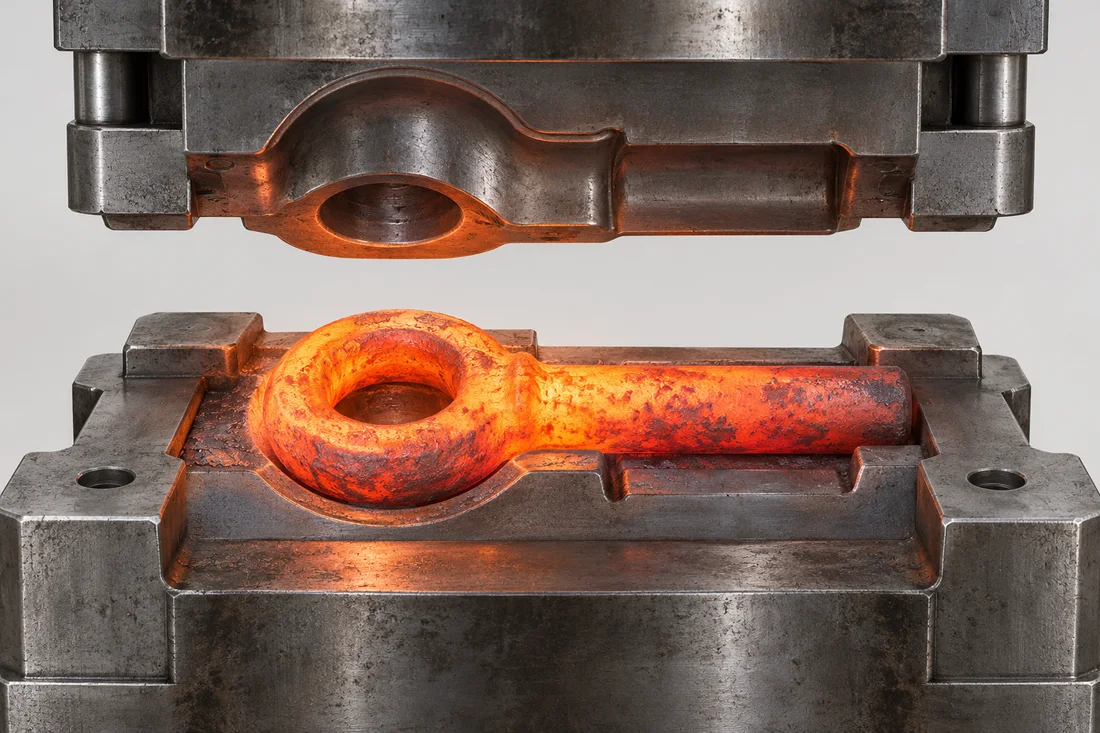
Define the intended function first
State how the component connects and how force enters the eye. Include the pin, supporting parts and expected movement. A flat drilled lug, a fork and a closed forged ring create different interfaces even when each is casually called an eye bolt.
Show the articulation and load direction
Provide the range of movement and surrounding clearances. Identify whether the connection sees aligned tension, angular loading or changing directions. These details help the responsible engineer assess the load path and select the dimensions that require control.
Treat lifting requirements explicitly
A custom ring geometry is not a working-load rating. Lifting-related use requires an approved design basis, suitable material condition and the specified verification and documentation. Do not infer a rating from dimensions, appearance or similarity to an unrelated catalog component.
Prepare a complete manufacturing review
Dimension the eye, shank transitions, thread and seating faces. State the required properties and acceptance checks. The forming and machining sequence should be considered with the function, rather than selecting a production method before the application requirements are understood.
Specification example
For a pivoting fixture connection, provide the mating clevis and pin. For a lifting requirement, include the approved lifting specification instead of using the fixture drawing as a substitute.
RFQ checklist
- Linkage or lifting use
- Mating pin and movement envelope
- Load directions and design requirements
- Material and final condition
- Required verification and records
Use the RFQ preparation checklist, then submit your drawing for review. For acceptance requirements, see quality planning.
General guidance only. Material properties, tolerances, standards and manufacturing feasibility must be verified for the actual specification. This article does not establish a product performance guarantee.