
 ZUFEK
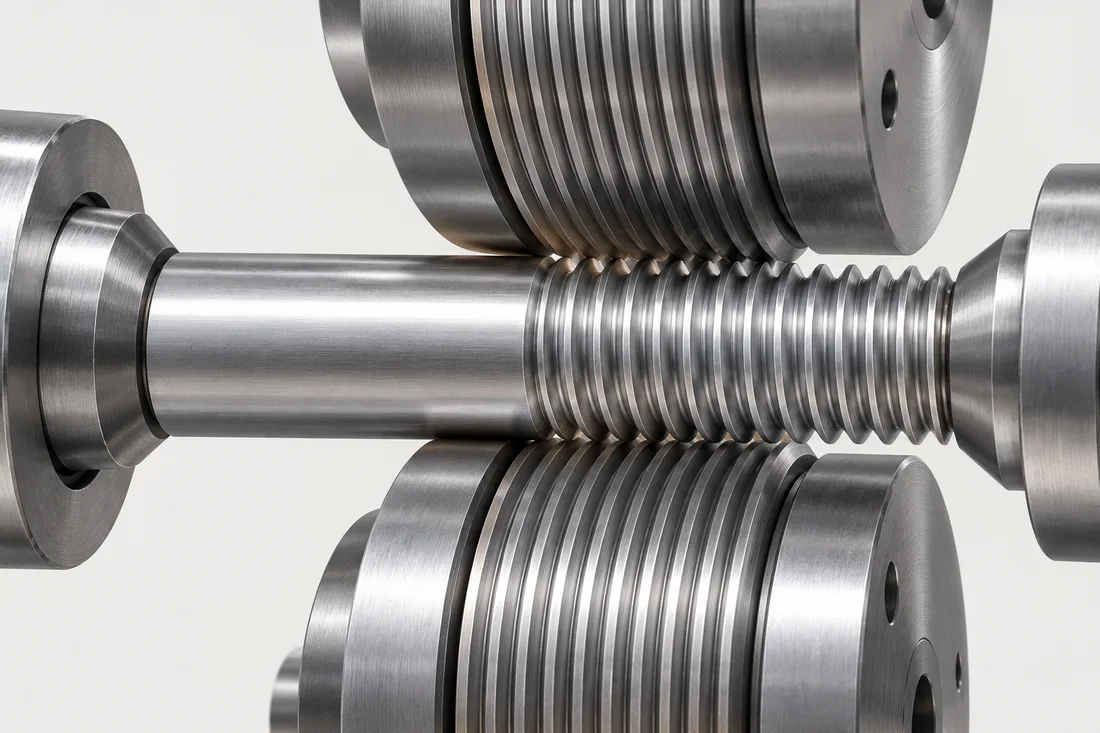
Define the thread before the production method
Provide designation, profile, pitch, tolerance class and usable engagement. Include special roots, crests or transitions where applicable. A request to roll the thread does not resolve an incomplete thread specification, and a generic thread name may not define a custom profile.
Review material and the proposed sequence
Rolling displaces material; cutting removes material. Their feasibility depends on the grade, condition, geometry and available tooling. Discuss the sequence relative to heat treatment and other finishing operations rather than assuming the same process can be transferred unchanged to a different material.
Avoid a universal strength ranking
Rolling may provide useful surface and material effects in suitable conditions, but the finished connection still needs the specified properties and acceptance. Cutting can be appropriate for many special geometries and quantities. Process labels alone should not replace the design or verification of the actual component.
Agree the finished acceptance method
State the required gauging, dimensional checks and any profile verification. Inspection should evaluate the final supplied condition, including coating where relevant. If a manufacturing method is mandatory, record it explicitly and explain any approval requirement for a proposed route change.
Specification example
For a short run of a special trapezoidal thread, provide the complete profile and mating requirement. Ask the supplier to explain the proposed route instead of selecting a process solely from a general cost comparison.
RFQ checklist
- Complete thread geometry
- Material and final condition
- Treatment and threading sequence
- Mandatory versus preferred method
- Final thread acceptance
Use the RFQ preparation checklist, then submit your drawing for review. For acceptance requirements, see quality planning.
General guidance only. Material properties, tolerances, standards and manufacturing feasibility must be verified for the actual specification. This article does not establish a product performance guarantee.