 ZUFEK
Brass
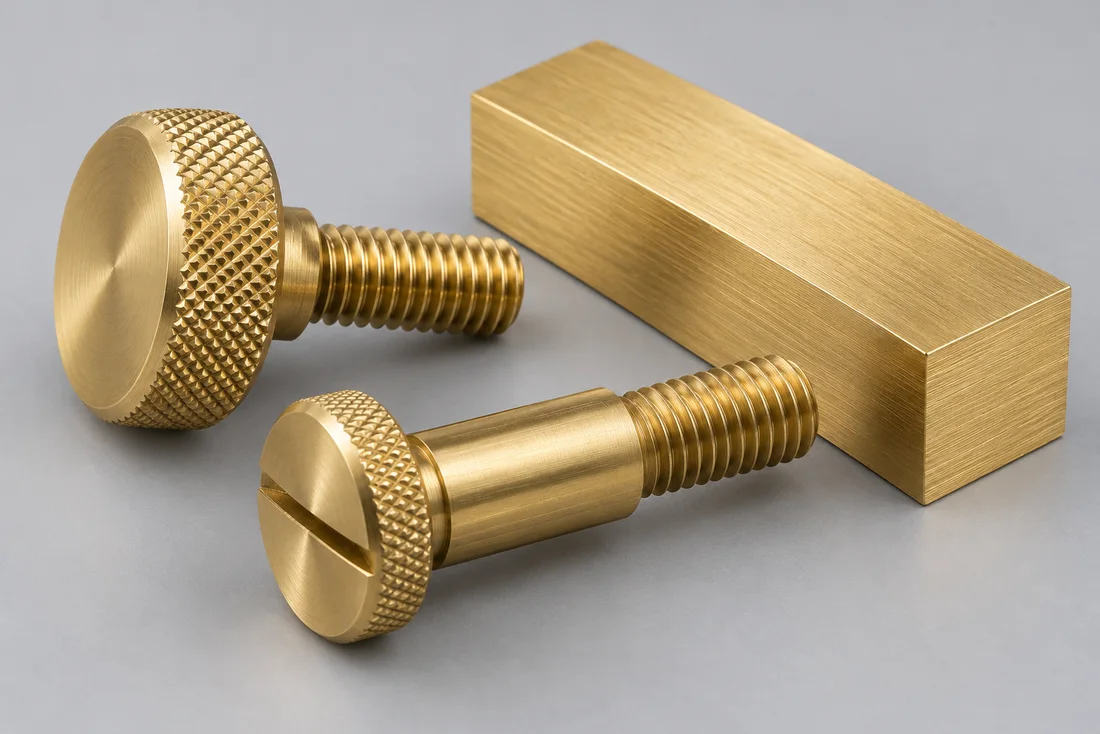
Copper-zinc alloys can be useful for drawing-specific machined threaded components where machining behavior, contact conditions and the selected alloy composition fit the application.
Strength reference
Strength changes with composition and temper. The example below is published typical H02 rod data and must not be applied to all brass fasteners.
| Grade / condition / basis | Tensile strength Rm (MPa) | Yield / 0.2% stress (MPa) | Scope of the reference |
|---|---|---|---|
| C36000 rod, H02 reference | 386 typical | 310 typical | CDA typical rod values; use the ordered alloy/temper specification for acceptance. |
Values refer to the stated material or fastener-class basis. They are not a certified property or load rating for every ZUFEK custom geometry. Confirm the applicable specification and test condition for the ordered part.
Compare grades and delivery conditions
A material family is a starting point, not a complete specification. The following options are selection references; supply and suitability require drawing review.
| Grade or specified condition | What distinguishes it | When to consider it | What to confirm before ordering |
|---|---|---|---|
| C36000 — free-cutting brass | Leaded free-machining brass. | Turned threaded parts when the specification permits this composition. | Check lead restrictions for the actual market and end use; do not claim universal compliance. |
| C26000 — cartridge brass | A different copper-zinc composition and forming behavior. | Consider where the required fabrication route favors this grade. | Not a drop-in replacement for free-cutting brass; review machinability and temper. |
| Specified low-lead or lead-free brass | Require the exact alloy and governing composition limits. | Applications with explicitly defined substance or end-use requirements. | Lead-free is not a complete grade designation. Verify machining, properties and required documents. |
| CW614N / CuZn39Pb3 | An EN leaded brass designation for machining-oriented stock. | Turned threaded components when that exact specification is permitted. | Confirm the composition and product standard; do not silently relabel it C36000. |
| CW617N / CuZn40Pb2 | A distinct brass composition considered for hot-forming routes. | Formed blanks followed by machining, subject to geometry and stock review. | Define stock form and condition; forming suitability is not a finished strength guarantee. |
How to narrow the choice
Choose brass by exact composition, temper and processing requirements. If lead content matters, put the applicable limit and evidence in the RFQ instead of requesting only environmentally friendly brass.
Write an unambiguous material requirement
Include the designation standard, exact grade, product form, delivery condition, final mechanical requirements, surface treatment and acceptance evidence. Similar names across EN, ASTM, SAE, JIS or GB systems are comparison leads, not permission to substitute.
If the grade is not yet decided, send the load or locating function, environment, mating materials, quantity and drawing. Ask for a proposed grade and route with stated assumptions before approving the material.
The listed grades are comparisons for drawing review, not a declaration that every grade, size or treatment is held in stock. Availability, route and ordered evidence are confirmed in the quotation.
Selection, processing and acceptance
Choose the grade and condition together with the job the screw performs. The following checks connect the material shortlist to manufacturing and sample acceptance.
- Function and grade choice
- For turned adjusters, compare free-machining alloys such as C36000 or a drawing-specified CW614N. For a formed blank, review a forming-oriented grade such as CW617N under its own specification. C26000 serves a different forming balance. Do not choose by yellow color or assume that these designations authorize cross-standard substitution.
- Processing and final dimensions
- Material composition and supplied condition affect chip control, forming and the attainable features. A low-lead alternative can need a different cutting strategy and cost basis. Review plating, thread tolerances and residual stresses together; if the service medium presents a dezincification or stress-corrosion concern, address it during grade selection.
- What the sample must demonstrate
- Identify the exact alloy, temper and relevant composition limit. Agree the evidence needed for the intended end use and market rather than accepting a generic green-material statement. Define final thread, contact, finish and any leak or functional test separately; alloy identification alone does not qualify the assembled product.
Example: a C36000 turned adjustment screw
For an indoor fixture knob, begin with machining and contact requirements, then confirm that the alloy composition is permitted for the intended product and market.
Illustrative material request. Drawing-specific limits and acceptance criteria remain to be agreed; this is not a released design or a ZUFEK test result.
- Grade and supplied condition
- C36000 bar in H02 condition under the agreed product specification. Identify any customer composition restrictions before selecting the stock.
- Finished-part requirement
- Specify usable thread, adjustment duty and required mechanical acceptance. A typical rod value is not a finished screw rating.
- Surface and mating interface
- Define knurling, contact face and any plating or appearance requirements. Review repeated adjustment against the actual mating material.
- Acceptance records
- Agree grade/lot identification and composition evidence where required, together with final dimensions and the specified finish records.
- Alternative to review, not assume
- C26000 changes the processing basis. A low-lead or lead-free alternative needs an exact alloy designation, not only a marketing description.
Material selection questions
Are C36000 and CW614N automatically interchangeable?
No. They are commonly discussed for similar machining duties, but the drawing must identify the governing composition and product requirements. Compare the actual specifications and obtain approval before substituting.
Is lead-free brass a complete material specification?
No. State the exact alloy, permitted composition, supplied condition and required documents. The words lead-free do not define mechanical properties, machinability or approval for a particular end use.
Why consider this family?
- Useful for custom turned profiles and threaded details
- Alloy selection can support different appearance and contact requirements
- Material composition can be matched to the customer specification
Application range
Instrument hardware, adjustment components, connection parts and selected custom fittings.
Selection and process considerations
Specify the actual alloy rather than a brass color. C36000 is a leaded free-cutting brass; composition or regulatory restrictions may require a different alloy. Mechanical behavior, media compatibility and any required leak test remain application-specific.
Include in the RFQ
- Exact alloy and composition restrictions
- Temper and material documentation
- Threaded and contact geometry
- Finish and functional acceptance
Related products and manufacturing routes
Relevant application discussions
Choose material and finished strength together
Use a common set of functional, environmental and acceptance requirements before comparing grades and conditions. Separate material stock figures from finished fastener classes and assembled joint performance.
Follow the material and strength selection workflow ↗Connect the part to its requirements.
Review these related topics for this design or route. Grade, treatment, geometry and acceptance remain drawing-specific.
Rolled or cut threads: questions to resolve in the RFQ ↗
Thread generation is a process choice, while thread geometry and acceptance are product requirements. A complete RFQ explains both without confusing the method with a guaranteed result.
ENGINEERING GUIDEChoosing material for a custom metal screw ↗
Material selection begins with the service environment and mechanical requirements. The best specification balances function, manufacturability, availability and verification.
Discuss brass for your drawing.
Share your drawing, quantity and application requirements with our team.