
 ZUFEK
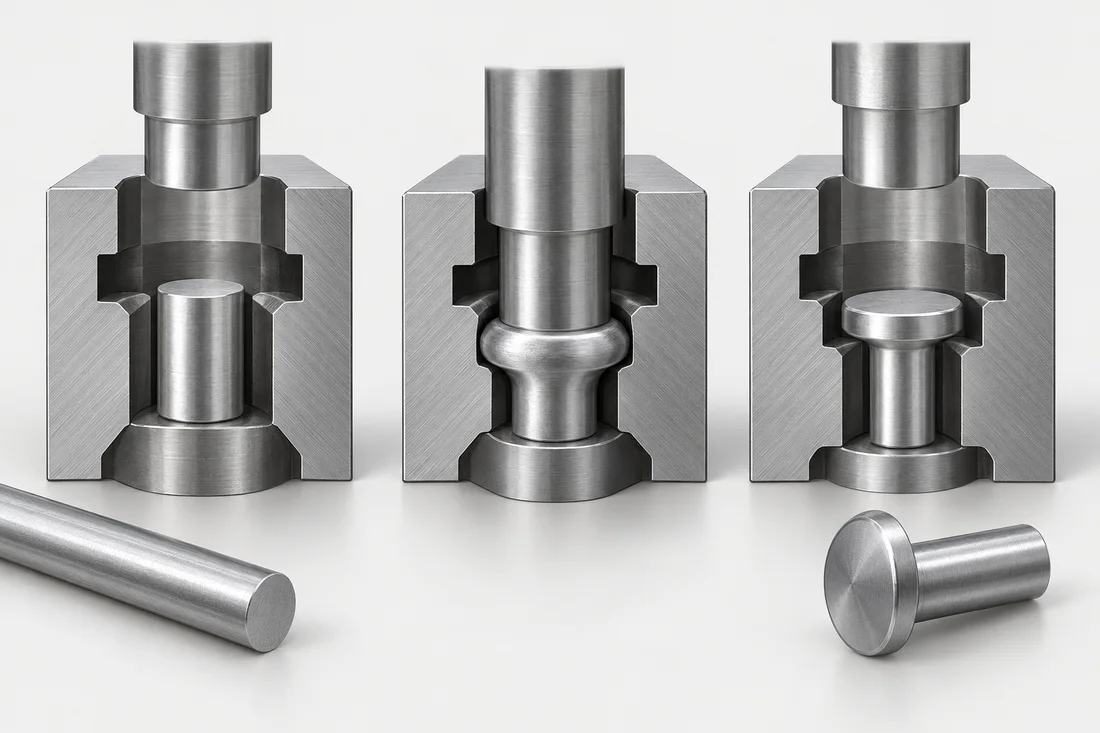
Start with the repeat volume
Cold heading can be economical for repeated geometries at a suitable volume, while CNC turning can offer flexible setup for prototypes and varying features. The actual break-even point needs a quotation for the drawing, not a universal quantity rule.
Separate bulk shape from functional detail
A head and rough shoulder may suit forming, while a bore, flat or critical shoulder needs machining. A hybrid route should be costed as a complete sequence rather than comparing only the first operation.
Check the material and acceptance requirements
Formability, stock condition and required final properties influence both routes. Machining is not universally weaker than cold heading: material, geometry, heat treatment and load case determine performance.
Review the complete route
Include thread generation, any treatment, precision finishing, coating, cleaning and inspection. Specify which dimensions are functional so the proposed process protects the relevant datums and fits.
Build a route comparison around the same finished specification
List stock preparation, primary shape, local features, threading, treatment, finishing and verification for each option. Record which operations remain after forming. Compare tooling and recurring costs separately at realistic order quantities. There is no universal order quantity at which a complex cold-headed part becomes cheaper than its machined alternative.
Ask what changes between prototype and production
A machined sample can help review assembly, but does not automatically validate a later formed route. Identify whether material condition, local radii, surface condition or final properties differ. Agree which checks must be repeated on parts from the intended production route before relying on a prototype approval.
Resolve geometry before committing tooling
A change to head shape, a drive recess or a step can affect tooling differently from a change to a turned feature. Review likely drawing changes before authorizing tooling. Where uncertainty remains, agree what the samples are intended to demonstrate and which production decisions remain open. This separates an assembly concept trial from approval of a complete manufacturing route.
Use the RFQ preparation checklist, then submit your drawing for review. For acceptance requirements, see quality planning.
General guidance only. Material properties, tolerances, standards and manufacturing feasibility must be verified for the actual specification. This article does not establish a product performance guarantee.