
 ZUFEK
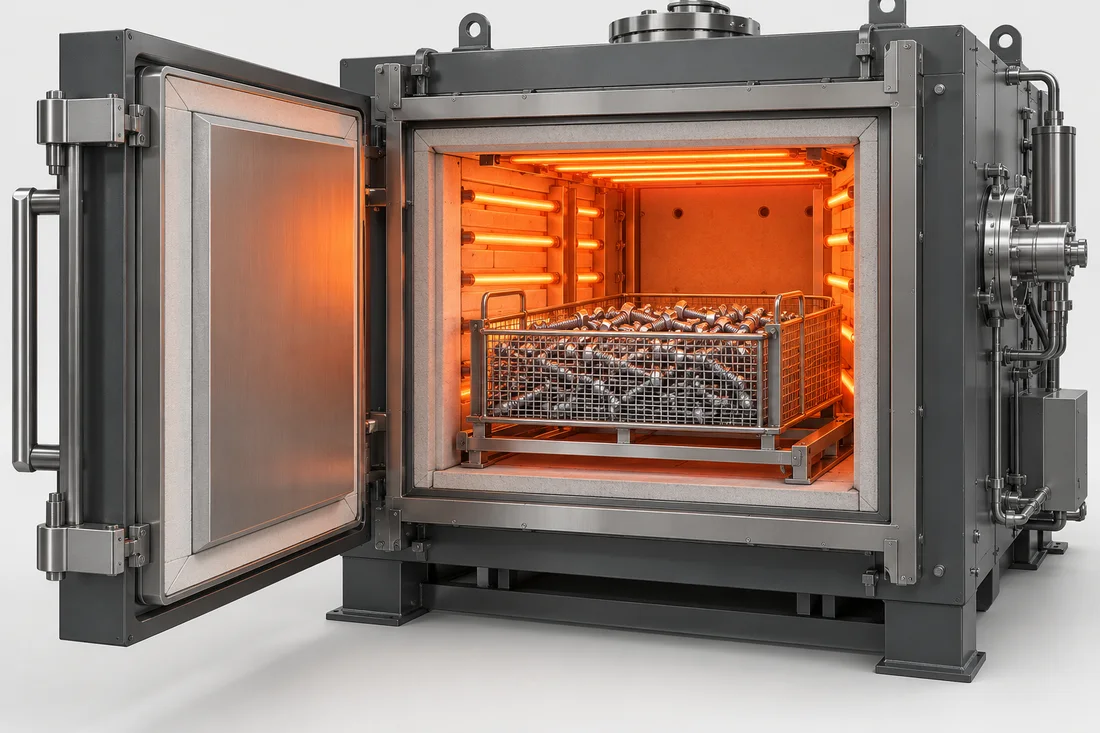
Distinguish austenitic from precipitation-hardening grades
304 and 316 are austenitic stainless steels and are not hardened by the precipitation-aging treatment used for 17-4PH. They can strengthen through cold work, which must be considered separately from heat treatment.
State the purpose of solution treatment
Solution annealing and stress-related treatments have material-specific purposes and can affect corrosion behavior and dimensional condition. They should not be treated as a universal hardening cycle.
Define the final condition of 17-4PH
A precipitation-hardening grade requires an explicitly selected condition and corresponding property requirements. Do not assume that any aging cycle is interchangeable with another.
Coordinate finish and verification
Passivation is a surface treatment, not the same operation as solution treatment or precipitation hardening. State material evidence, final properties, critical dimensions and requested inspection records.
Resolve what the drawing means by high-strength stainless
Clarify whether the requirement names a finished fastener class or a specific alloy and condition. A change from an austenitic grade to 17-4PH changes the material specification as well as the treatment discussion. It needs approval against corrosion, mechanical and application requirements; it is not a manufacturing shortcut to apply without the designer.
Separate material treatment from surface treatment
Passivation addresses surface condition; it is not a replacement for the specified material condition. Keep material evidence, mechanical requirements and the surface process separately identifiable in the order. A visually similar surface does not prove that the correct alloy or final condition was supplied.
Review assembly galling as a separate mechanism
A selected stainless grade does not eliminate the need to review thread contact and the mating pair. Surface condition, assembly and lubrication can affect galling, and a lubrication change can also affect tightening behavior. Coordinate the assembly process with the approved specification instead of using an unqualified torque figure from another joint.
Use the RFQ preparation checklist, then submit your drawing for review. For acceptance requirements, see quality planning.
General guidance only. Material properties, tolerances, standards and manufacturing feasibility must be verified for the actual specification. This article does not establish a product performance guarantee.