
 ZUFEK
Begin with the material underneath
State the exact base material and condition. A finish suitable for one substrate may be inappropriate for another. Do not use a photograph of a shiny screw as evidence that the same treatment can be applied to a different grade or component without review.
Distinguish the process purpose
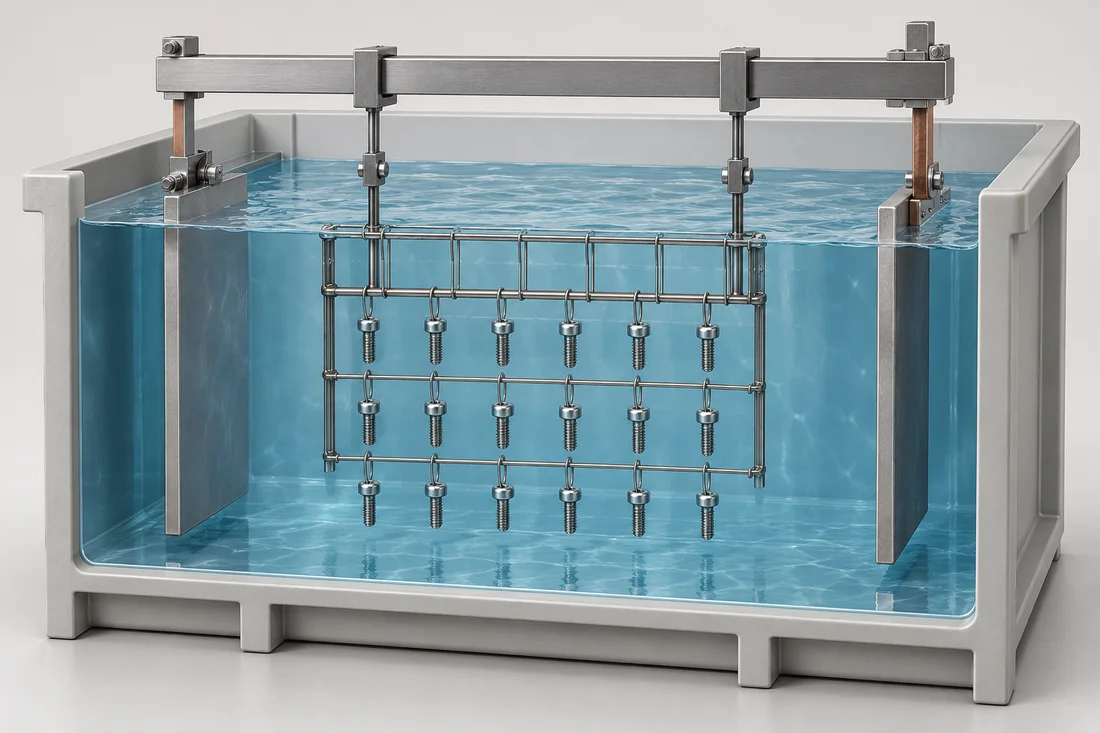
Nickel plating deposits a coating, while stainless passivation addresses the stainless surface through a different process. These are not interchangeable names for polishing. Describe the required appearance, environment, friction or other function so the treatment discussion follows a defined need.
Consider dimensional and assembly effects
Plating thickness, exposed surfaces and thread fit may need control. For either route, specify any cleaning, masking or subsequent operation that affects the final condition. Surface treatment should be coordinated with the part drawing rather than added as an informal note after machining.
Agree evidence and acceptance
Request the appropriate process records and checks for the actual specification. Appearance approval can be useful but does not replace technical acceptance. If a reference sample is used, identify what it controls and which material or dimensional requirements remain governed by the drawing.
Specification example
If a buyer requests a silver finish, clarify whether the priority is visual consistency, corrosion behavior or another property. The answer can lead to a different process specification even when the parts look similar.
RFQ checklist
- Substrate grade and condition
- Required surface function
- Treatment specification
- Dimensional and masking requirements
- Appearance and process acceptance
Use the RFQ preparation checklist, then submit your drawing for review. For acceptance requirements, see quality planning.
General guidance only. Material properties, tolerances, standards and manufacturing feasibility must be verified for the actual specification. This article does not establish a product performance guarantee.