 ZUFEK
Start with four inputs
Provide a controlled drawing, the required material and final condition, the expected quantity pattern and the acceptance requirements. Distinguish a one-off geometry sample from the intended repeat-production order. Identify critical shoulders, holes, drive features, threads and surfaces. If the geometry is still changing, mark the open features. A supplier cannot responsibly price a production route as though the interface is frozen when the customer still expects major changes.
Ask the supplier to state which assumptions its proposal uses. A low unit price may depend on a repeat quantity, dedicated tooling or an inspection scope that is absent from another quotation. The first comparison should therefore be technical scope, not the price column. Resolve exceptions before deciding whether two proposals represent the same delivered part.
Evaluate cold heading for the appropriate geometry and programme
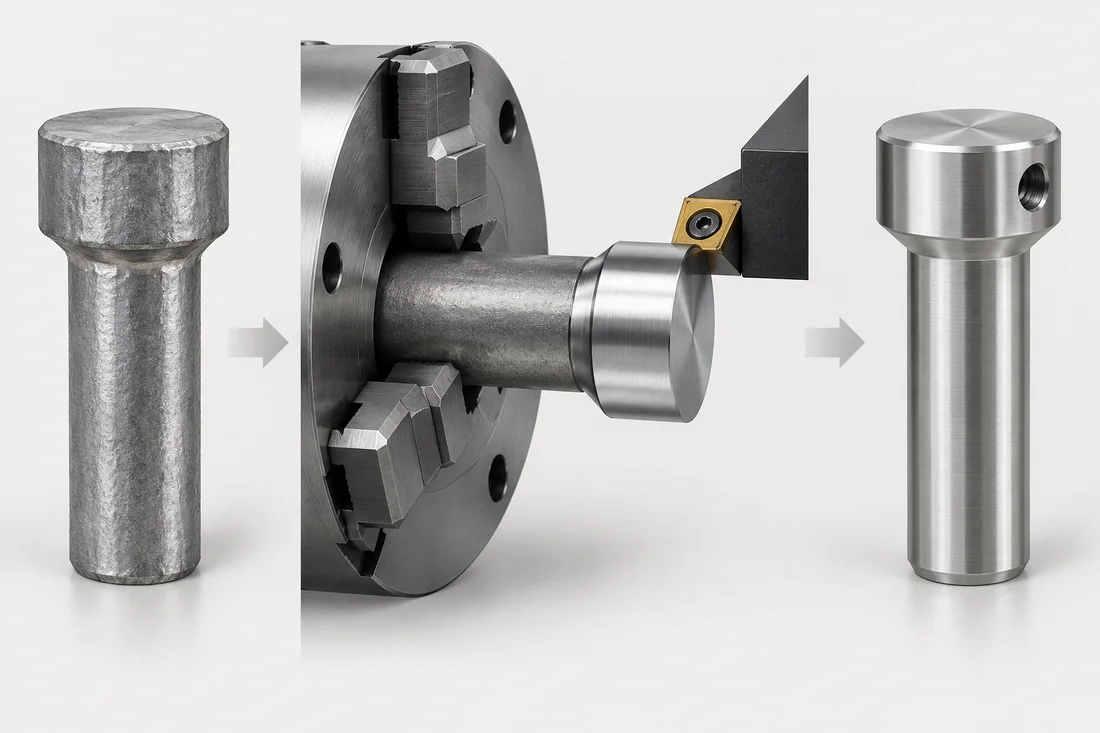
Cold heading forms suitable material into a blank using a reviewed sequence and tooling. It can be evaluated for repeat volumes and appropriate heads, shoulders and other formed features. The practical review concerns material formability, shape complexity, tool access and any required secondary work. Do not assume that a deep internal feature, unusual drive or eccentric detail can be produced economically in one forming operation merely because the main head is suitable for heading.
Separate the tooling commitment from the recurring part price. Identify what is included, which drawing changes would affect tooling and how sample approval will be handled. Ask which final features are formed and which are machined or finished later. A proposal described as “cold headed” may still contain important secondary operations. Those operations should remain visible when comparing cost, lead time and acceptance.
Evaluate turning for flexibility and complex combinations
CNC or automatic turning can be useful for multi-step geometry, holes and prototype quantities, subject to material, access and tooling review. The absence of a dedicated forming tool does not mean there is no setup cost, process planning or special tooling. Discuss the features that require additional operations, the final material condition and any finishing needed after treatment. Do not assume that a turned surface automatically meets every geometric or surface requirement.
Turning can provide a practical development route while the interface is being refined. Record which sample characteristics are representative of the intended final part and which remain provisional. If the programme later moves to a formed or hybrid route, define the review needed to preserve the approved interface. A successful turned sample should not become an unexamined approval of a different production process.
Evaluate hybrid and hot-forged routes where appropriate
A hybrid route can use a formed blank followed by selected machining or finishing. It may make sense when a repeat-production shape is suitable for forming but certain functional features need additional control. Ask the supplier to describe the operations that establish those features and the condition in which final dimensions are accepted. The economic case depends on the complete route, not simply on describing it as a compromise between forming and machining.
Hot forging may be considered for suitable larger or more demanding forming geometries after a specific review. It introduces its own blank, scale, trimming, machining and treatment questions. Avoid treating one nominal diameter as a universal boundary between processes. The supplier should review the actual part, material and equipment capability. The approved drawing and required properties govern the discussion.
Compare complete programmes
Build a comparison sheet with separate rows for tooling, setup, sample quantity, recurring price, secondary operations, heat treatment, surface treatment, inspection, documents, cleaning and packaging. Record minimum or economic quantity assumptions without converting them into an unconditional company-wide rule. Ask what happens if the order quantity changes or a sample revision is required. Confirm whether any outside operation affects the proposed schedule.
Include approval time in the programme. A route that produces a blank quickly may still need treatment and acceptance work. A lower recurring cost may not justify a tooling commitment for a small or uncertain programme. Conversely, remaining on a flexible sample route indefinitely can preserve unnecessary recurring cost after the design is stable. Review the decision again when volume and design maturity change.
Require a route-related acceptance explanation
For each critical feature, ask which operation establishes it and how the final result will be checked. For example, a shoulder might be formed oversize and finished later, while a thread is produced through a different operation. If heat treatment or coating follows a precision operation, identify the final acceptance condition. A route chart is useful only when it explains how the drawing requirements survive the sequence.
Do not infer performance solely from process names. The material, condition, geometry and verification matter. If the purchaser needs a particular mechanical property or a controlled surface relationship, specify it and agree the evidence. NASA’s Fastener Design Manual provides general background on fastener design considerations, but a custom production proposal still needs its own reviewed drawing and acceptance basis.
Record the chosen route and change triggers
The release record should identify the drawing, quantity assumptions, approved material and finish condition, proposed route, open exceptions and evidence required. State which route or source changes require notification or renewed approval. Keep the accepted proposal with the order rather than relying on a verbal explanation that may be lost during repeat purchasing.
A useful route decision is reversible in an orderly way: if the assumptions change, the team knows what to review. It is not a permanent claim that one process is best. Select the route that can deliver the actual specification at the programme’s quantity and maturity, and make the trade-offs visible enough for the purchaser to understand what the quoted price and schedule include.
Sources and scope
Source context is distinguished from ZUFEK editorial analysis. Examples are illustrative, not delivered customer cases or measured test results. Check the applicable current specifications for your product.