
 ZUFEK
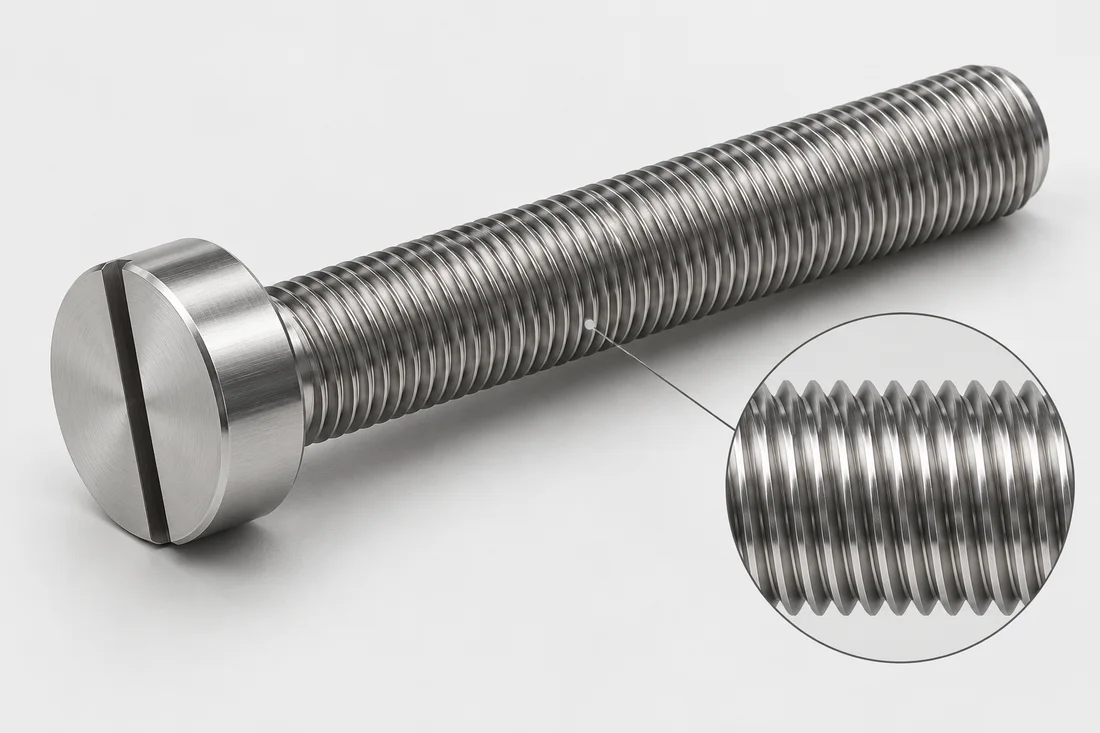
Pitch, travel and locking
Relate pitch to the intended adjustment, while considering the mating thread fit and available engagement. Fine pitch does not by itself establish positioning accuracy or vibration resistance. State contact geometry, travel, locking and thread acceptance as separate requirements.
Review the route before fixing the quotation
For fine & extra-fine pitch screws, review Thread Rolling, Cutting & Tapping, Swiss-Type & CNC Turning, CCD Vision & Dimensional Inspection against the drawing and quantity. Identify which features can be produced in the initial shape and which require a separate setup. A change to a functional shoulder, bore, drive or thread can change the proposed route as well as the inspection effort.
The drawing review should resolve pitch examples; fit & engagement; adjustment action. Keep material condition and finishing allowance attached to those requirements. Define the acceptance condition for critical features and approve any proposed dimensional change before comparing samples with the original assembly.
From drawing to approved samples
Fine pitch alone does not guarantee resistance to loosening. Specify locking and vibration requirements separately. Identify the drawing revision, prototype quantity and expected repeat demand. Where the first part is based on an existing sample, separately confirm material and hidden features rather than inferring them from appearance.
The typical sampling lead time, including tooling, is approximately 10–15 days. The schedule is confirmed after drawing review and agreement on the sample specification; material availability, special treatment and inspection requirements can affect the confirmed date. Confirm when the agreed schedule starts in the quotation. Sample approval and repeat-production delivery are separate milestones.