
 ZUFEK
10B21 Boron Steel
A boron-alloyed steel grade considered for formed fastener routes when the drawing, final material condition and required properties are defined.
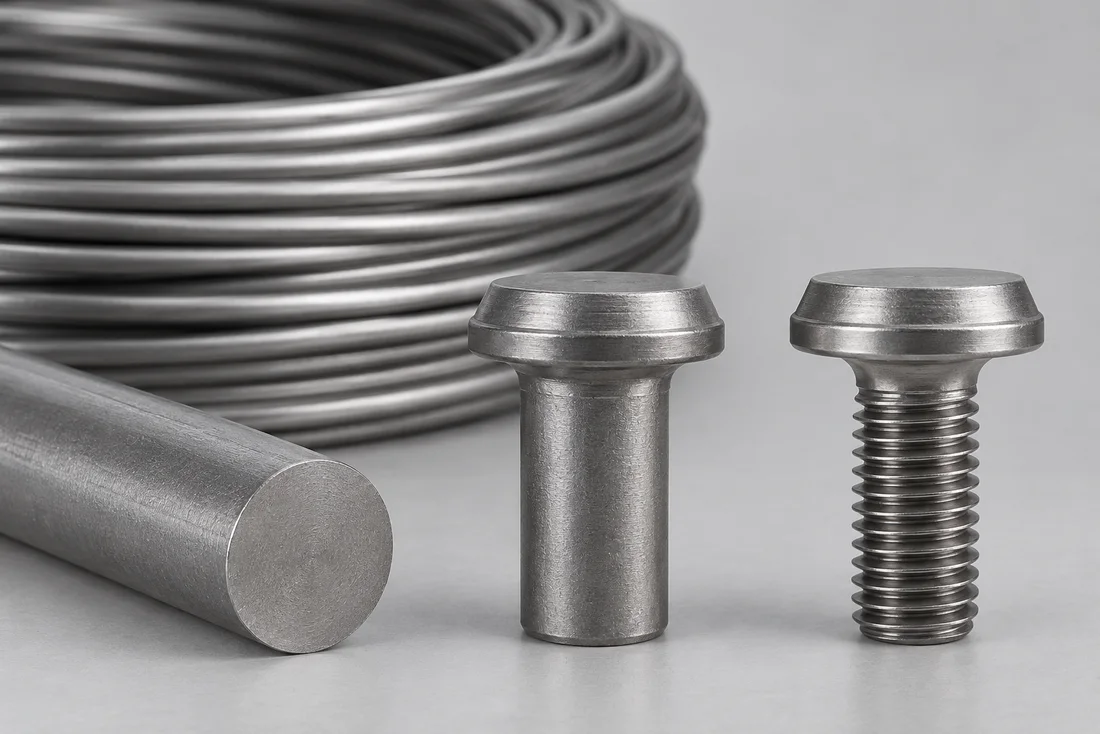
Strength reference
10B21 is a grade designation, not a finished strength class. There is no single tensile strength that applies to every 10B21 screw.
| Grade / condition / basis | Tensile strength Rm (MPa) | Yield / 0.2% stress (MPa) | Scope of the reference |
|---|---|---|---|
| 10B21 in the required final condition | Specify for the order | Specify for the order | Forming, heat treatment and final requirements determine the supplied properties. |
Values refer to the stated material or fastener-class basis. They are not a certified property or load rating for every ZUFEK custom geometry. Confirm the applicable specification and test condition for the ordered part.
Compare grades and delivery conditions
A material family is a starting point, not a complete specification. The following options are selection references; supply and suitability require drawing review.
| Grade or specified condition | What distinguishes it | When to consider it | What to confirm before ordering |
|---|---|---|---|
| 10B21 — forming stock | State the wire specification and forming condition. | Cold-heading route review for repeat quantities. | Wire condition is not the final screw condition; request material identification and agreed forming quality. |
| 10B21 — final heat-treated part | State final core properties and the required verification. | Parts where the approved route includes heat treatment. | Do not assume a strength class or prescribe carburizing from the grade name. |
| 10B21 — case requirements, if specified | State surface/core requirements separately. | Only where the drawing calls for an appropriate hardened surface. | Agree hardness, case requirements and inspection method; this is not a separate material grade. |
How to narrow the choice
These rows describe different order conditions of one grade, not three interchangeable grades. Choose 10B21 only after the supplier reviews the geometry, required final properties and complete treatment route.
Write an unambiguous material requirement
Include the designation standard, exact grade, product form, delivery condition, final mechanical requirements, surface treatment and acceptance evidence. Similar names across EN, ASTM, SAE, JIS or GB systems are comparison leads, not permission to substitute.
If the grade is not yet decided, send the load or locating function, environment, mating materials, quantity and drawing. Ask for a proposed grade and route with stated assumptions before approving the material.
The listed grades are comparisons for drawing review, not a declaration that every grade, size or treatment is held in stock. Availability, route and ordered evidence are confirmed in the quotation.
Selection, processing and acceptance
Choose the grade and condition together with the job the screw performs. The following checks connect the material shortlist to manufacturing and sample acceptance.
- Function and grade choice
- 10B21 is one grade, not a group of strength levels. A formed flange screw and a case-hardened tapping screw can require different final properties even when the starting grade is the same. State whether the part clamps a joint, forms a thread or provides a wear surface before selecting the treatment route.
- Processing and final dimensions
- Wire preparation, heading stages, secondary machining and thread forming need to suit the geometry and volume. Decide the heat-treatment sequence with the manufacturer. Carburizing is a route for an agreed case requirement, not an automatic instruction attached to 10B21; through-hardening and case-hardening requirements must not be mixed.
- What the sample must demonstrate
- Define core hardness, surface hardness and case depth only where applicable, with the method and locations to be checked. Connect these results to the treatment batch and inspect relevant dimensions in the final supplied condition. A surface-hardness reading alone does not establish core toughness or the finished strength class.
Example: 10B21 from heading wire to an accepted flange screw
For repeat quantities, describe the incoming wire and finished screw as two different acceptance stages. A formable starting condition is not the final mechanical requirement.
Illustrative material request. Drawing-specific limits and acceptance criteria remain to be agreed; this is not a released design or a ZUFEK test result.
- Grade and supplied condition
- 10B21 wire under the agreed material specification and cold-heading delivery condition; retain the material and lot identity.
- Finished-part requirement
- Put the required final fastener properties on the drawing. Where applicable, identify core and case requirements separately rather than prescribing carburizing from the grade name.
- Surface and mating interface
- Review the bearing face, usable thread and final coating. Define when treatment-sensitive dimensions are accepted.
- Acceptance records
- Agree material identification, treatment-batch records and final mechanical or hardness checks as applicable to the part.
- Alternative to review, not assume
- A different wire condition, grade or treatment route can change forming and final properties. Review the complete proposal before sample approval.
Material selection questions
Is there one tensile-strength value for 10B21?
No. Incoming wire, formed parts and heat-treated screws are different conditions. Specify the final properties for the actual part and test basis instead of assigning one strength number to the grade.
Should every 10B21 screw be carburized?
No. Choose the route from the required core and surface behavior. If a hardened case is needed, define its acceptance; otherwise do not add a carburizing requirement solely from the material name.
Why consider this family?
- Relevant to repeat fastener forming discussions
- Can be reviewed with the complete heat-treatment route
- Final requirements can distinguish core properties and surface condition
Application range
Drawing-defined production screws, flange parts and selected high-volume automotive or equipment fastener applications.
Selection and process considerations
Do not prescribe carburizing solely because the drawing says 10B21. State the required final mechanical properties and any case-depth or hardness requirements where relevant. Confirm the actual grade, processing route and material documentation during quotation.
Include in the RFQ
- Exact grade and material condition
- Required finished properties
- Core or case requirements where applicable
- Treatment records and mechanical acceptance
Related products and manufacturing routes
Relevant application discussions
Material reference sources
Choose material and finished strength together
Use a common set of functional, environmental and acceptance requirements before comparing grades and conditions. Separate material stock figures from finished fastener classes and assembled joint performance.
Follow the material and strength selection workflow ↗Connect the part to its requirements.
Review these related topics for this design or route. Grade, treatment, geometry and acceptance remain drawing-specific.
Cold heading or CNC turning: choosing a custom screw route ↗
Choose the manufacturing route around geometry, quantity, material and required condition. A lower cycle cost does not always offset tooling or secondary work.
ENGINEERING GUIDEHigh-strength screw coatings and hydrogen-risk review ↗
A high-strength steel fastener needs a coating decision that considers both corrosion and hydrogen exposure throughout processing.
Discuss 10b21 boron steel for your drawing.
Share your drawing, quantity and application requirements with our team.