
 ZUFEK
Copper
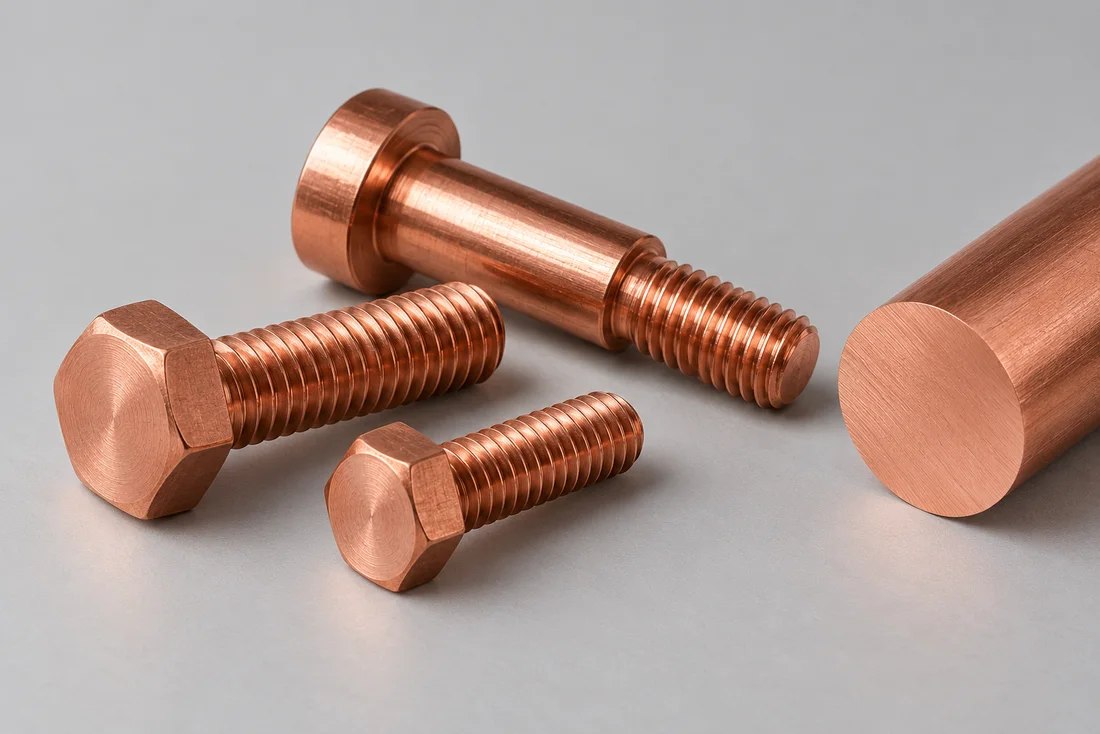
A material family considered where electrical or thermal function is important alongside the geometry and mechanical acceptance of the custom component.
Strength reference
Copper strength varies substantially with alloy, product form and temper. The following is a typical stock reference, not a screw acceptance requirement.
| Grade / condition / basis | Tensile strength Rm (MPa) | Yield / 0.2% stress (MPa) | Scope of the reference |
|---|---|---|---|
| C11000, H02 half-hard reference | Approximately 290 typical | Specify for the selected stock | CDA design-guide stock reference; other tempers and forms differ. |
Values refer to the stated material or fastener-class basis. They are not a certified property or load rating for every ZUFEK custom geometry. Confirm the applicable specification and test condition for the ordered part.
Compare grades and delivery conditions
A material family is a starting point, not a complete specification. The following options are selection references; supply and suitability require drawing review.
| Grade or specified condition | What distinguishes it | When to consider it | What to confirm before ordering |
|---|---|---|---|
| C11000 — ETP copper | Electrolytic tough-pitch copper. | Conductive components where the specified electrical and mechanical requirements suit this grade. | Order temper and electrical acceptance separately; do not infer joint contact resistance from bulk conductivity. |
| C10100 — oxygen-free electronic copper | A distinct oxygen-free copper designation. | Consider when the application explicitly requires its material specification. | Not simply a premium substitute for every copper screw; verify need, stock form and traceability. |
| C12200 — phosphorus-deoxidized copper | A distinct deoxidized copper grade. | Consider for the fabrication conditions identified by the designer. | Do not assume the same conductivity as C11000; verify grade-specific electrical requirements. |
How to narrow the choice
If the component carries current, define the electrical role, contact faces, plating, mating metal and final verification as well as the copper grade. Temper affects mechanical behavior; a copper-family label does not identify a usable strength value.
Write an unambiguous material requirement
Include the designation standard, exact grade, product form, delivery condition, final mechanical requirements, surface treatment and acceptance evidence. Similar names across EN, ASTM, SAE, JIS or GB systems are comparison leads, not permission to substitute.
If the grade is not yet decided, send the load or locating function, environment, mating materials, quantity and drawing. Ask for a proposed grade and route with stated assumptions before approving the material.
The listed grades are comparisons for drawing review, not a declaration that every grade, size or treatment is held in stock. Availability, route and ordered evidence are confirmed in the quotation.
Selection, processing and acceptance
Choose the grade and condition together with the job the screw performs. The following checks connect the material shortlist to manufacturing and sample acceptance.
- Function and grade choice
- Use C11000, C10100 and C12200 as distinct specifications, not price tiers for the same material. For a conductive stud, separate bulk conductivity from contact resistance at the assembled faces. For a heated or joined component, identify the fabrication atmosphere and thermal cycle before settling on the copper grade.
- Processing and final dimensions
- Turning, thread forming and subsequent heating can affect dimensions and material condition. Agree the actual stock temper and retain its identity through the route. If tin, nickel or another contact finish is required, define its scope and the surfaces that remain dimensionally or electrically functional after coating.
- What the sample must demonstrate
- Document material identity and any ordered conductivity result; inspect thread engagement and contact-face geometry. Define installation and contact verification with the mating assembly. Do not derive a current rating or tightening torque solely from the copper grade, stock tensile strength or visual surface appearance.
Example: a C11000 contact stud with a defined temper
For an electrical contact, review current-path and clamping functions together. The copper designation does not establish contact resistance, tightening behavior or finished connection capacity.
Illustrative material request. Drawing-specific limits and acceptance criteria remain to be agreed; this is not a released design or a ZUFEK test result.
- Grade and supplied condition
- C11000 bar in H02 condition, with the governing product specification and stock size identified. Confirm the condition for the actual supplied form.
- Finished-part requirement
- State electrical acceptance separately from mechanical requirements. Define the thread, bearing face and installation criteria for the mating assembly.
- Surface and mating interface
- Specify the contact coating if required, its contact area and the mating metal. Keep dimensional acceptance linked to the coated or uncoated surfaces actually supplied.
- Acceptance records
- Agree material identity, any ordered conductivity evidence, final dimensions and contact-test records when specified.
- Alternative to review, not assume
- C10100 and C12200 have different material specifications. Compare the actual electrical and fabrication requirements before changing grade or temper.
Material selection questions
Is oxygen-free copper always necessary for a conductive screw?
No. Select the exact grade from the electrical, fabrication and environmental requirements. Oxygen-free copper can address a specific process need, but the label does not establish a better finished contact in every assembly.
Can half-hard copper keep that condition after heating?
A thermal cycle can change the cold-worked condition. Review the actual time and temperature, then define final mechanical and electrical acceptance instead of carrying the incoming temper forward without checking.
Why consider this family?
- Relevant to electrical and thermal interface discussions
- Grade and temper can be selected for the required component function
- Can be reviewed for application-specific turned features
Application range
Electrical connection hardware, conductive custom components and thermal-interface threaded parts, subject to joint design.
Selection and process considerations
Conductivity and mechanical strength are separate requirements. Specify the copper grade and temper, contact surface condition, plating if required and the assembled joint requirements. Copper is not interchangeable with brass simply because both are copper-based materials.
Include in the RFQ
- Copper grade, temper and stock form
- Electrical or thermal requirements
- Contact surface and finish
- Mechanical and joint acceptance
Related products and manufacturing routes
Relevant application discussions
Choose material and finished strength together
Use a common set of functional, environmental and acceptance requirements before comparing grades and conditions. Separate material stock figures from finished fastener classes and assembled joint performance.
Follow the material and strength selection workflow ↗Connect the part to its requirements.
Review these related topics for this design or route. Grade, treatment, geometry and acceptance remain drawing-specific.
Choosing material for a custom metal screw ↗
Material selection begins with the service environment and mechanical requirements. The best specification balances function, manufacturability, availability and verification.
ENGINEERING GUIDETechnical cleanliness: writing a useful fastener requirement ↗
Cleanliness becomes a technical requirement when contamination can affect the assembly. Define what needs to be removed, how it is measured and how the clean condition is protected.
Discuss copper for your drawing.
Share your drawing, quantity and application requirements with our team.