

DONGGUAN ZUFEK PRECISION CO., LTD.
info@zufek.net
SPECIAL HEADS & FUNCTIONAL BOLTS

Custom Double-Ended Studs

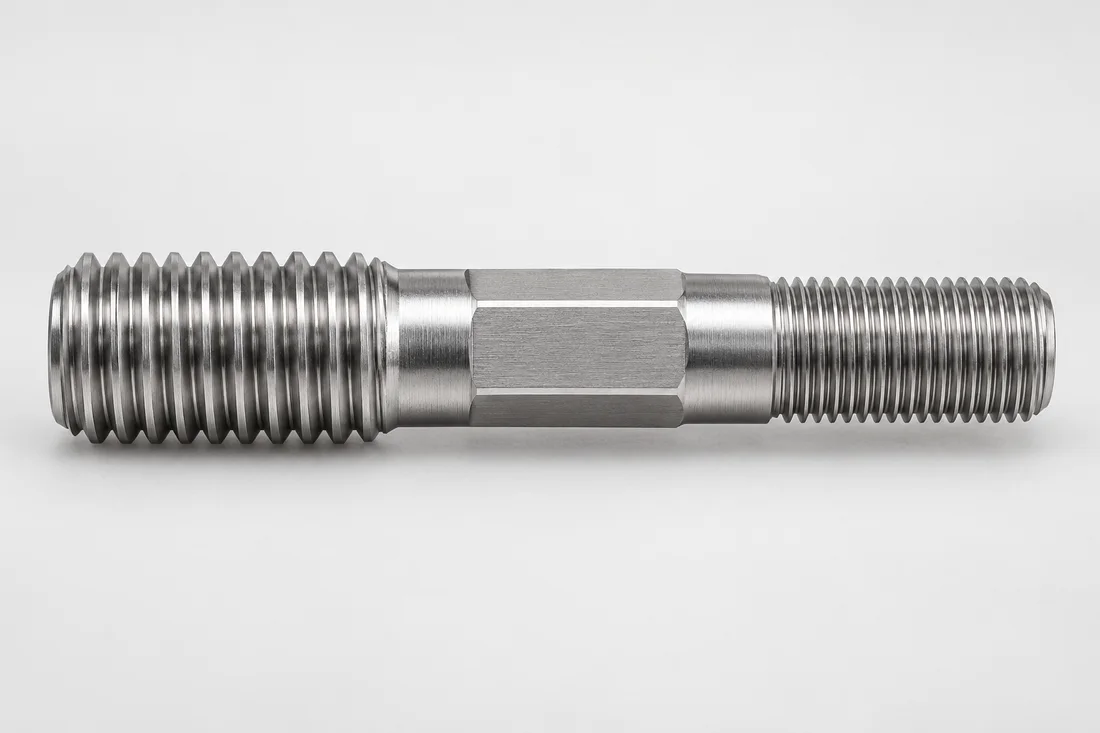
Two threaded ends can use different diameters, pitches or engagement lengths, separated by a custom center section.

Discuss this custom part
Double-ended stud illustration with different threaded ends and a plain center
Custom Double-Ended Studs

Where this design fits

Equipment mounting, spacing and mixed-thread connections.

What to include in the RFQ

State both mating threads, shoulder seating and assembly sequence.

Open the complete RFQ checklist ↗

Material and acceptance

Carbon steel, 10B21, SUS304/316, aluminum, copper/brass and titanium alloy requirements can be discussed. Suitability is specific to the part, grade and process.

Define material condition, coating, critical dimensions and required inspection records. A named product family does not imply a tested load, pressure or performance rating.

RELEVANT PROCESS OPTIONS

Make the features work together.

These routes are options for technical review. The approved drawing, quantity and material determine the actual sequence.

Related product designs

Application discussions

Useful technical reading

Keep end A, the centre section and end B identifiable

The sketch deliberately shows different threaded ends. Specify each end independently, then define the centre section that controls installation, seating or tool access.

AB123
Interface sketch — not to scale. Dimensions and acceptance follow the approved assembly drawing.
  1. End A: state thread system, diameter, pitch, handedness, usable length and intended engagement. Identify which mating component receives this end.
  2. Centre section: dimension shoulders and wrench flats from named references. Review installation order and the tool space remaining after the first end is fitted.
  3. End B: apply its own thread and final-finish acceptance. Define a practical end-identification method that does not damage controlled surfaces.

Keep A/B identification on the drawing, gauge record and package label where orientation matters. Record both mating-part revisions with the approved sample; a change to one end still requires review of installation access and engagement at the other.

Coordinate mixed-thread identification and inspection

End A and end B identification

Specify each end independently: diameter, pitch, handedness, usable thread and engagement. Dimension the center section and any seating shoulder. If the ends look similar, agree an identification method and include it in inspection and packaging to avoid reversing the part during assembly.

Review the route before fixing the quotation

For custom double-ended studs, review Swiss-Type & CNC Turning, Thread Rolling, Cutting & Tapping, Material-Specific Heat Treatment against the drawing and quantity. Identify which features can be produced in the initial shape and which require a separate setup. A change to a functional shoulder, bore, drive or thread can change the proposed route as well as the inspection effort.

The drawing review should resolve mixed thread ends; center shank; assembly orientation. Keep material condition and finishing allowance attached to those requirements. Define the acceptance condition for critical features and approve any proposed dimensional change before comparing samples with the original assembly.

From drawing to approved samples

State both mating threads, shoulder seating and assembly sequence. Identify the drawing revision, prototype quantity and expected repeat demand. Where the first part is based on an existing sample, separately confirm material and hidden features rather than inferring them from appearance.

The typical sampling lead time, including tooling, is approximately 10–15 days. The schedule is confirmed after drawing review and agreement on the sample specification; material availability, special treatment and inspection requirements can affect the confirmed date. Confirm when the agreed schedule starts in the quotation. Sample approval and repeat-production delivery are separate milestones.

CONNECTED SPECIFICATION TOPICS

Connect the part to its requirements.

Review these related topics for this design or route. Grade, treatment, geometry and acceptance remain drawing-specific.

START YOUR NEXT PROJECT

Send the details for your custom double-ended studs.

Share your drawing, quantity and application requirements with our team.

Request a quote
Get a quote ↗Email us

Choose how this website uses optional storage. You can change your choice at any time.

Your preferences are saved in this browser for 180 days. You can change or withdraw consent at any time. Withdrawal stops optional analytics and removes source information stored in your browser. Website access records are managed separately; contact us to exercise your privacy rights.

Read the cookie policy